Caregiver Blog
10 Warning Signs of Caregiver Burnout with Step by Step Practical Recovary Guide


Caregiver burnout is a state where your energy, focus, and patience slowly drain away, yet the responsibilities never stop. It gradually manifests through chronic fatigue, emotional instability, and feeling constantly overwhelmed. In this guide, you’ll learn the 10 critical warning signs of caregiver burnout and why they happen. Drawing from my 25+ years of caregiving training experience, I know firsthand that detecting these symptoms early makes managing and reversing burnout much easier before it impacts your health.
What does Caregiver Burnout feel like?
Burnout feels like this:
- The body and mind are completely exhausted
- No motivation to work
- Even small tasks seem like mountains.
- Emotionally fragile, angry, or sad
The Cleveland Clinic reports that mental fatigue, sleep problems, irritability, and long-term stress are the most common symptoms of burnout.
Common 10 Warning Signs for Caregivers
As a result of my 10 years of training experience and in-depth work in this field, I can identify these signs of burnout with great reliability. It is important to identify each of the points below promptly.
1. Constant fatigue
This is not a fatigue that can be relieved with a little rest, but a deep, long-lasting, and psychophysical fatigue that does not go away even with sleep or rest. According to the Home Care Assistance Network, this is the first and most common sign of burnout, which has a serious impact on daily activities. If fatigue is severe, learn strategies in our post on overcoming caregiving stress
2. Sleep problems
Burnout disrupts sleep:
- Can’t sleep.
- Frequent waking up in the middle of the night
- Being tired even after sleeping a lot
AARP says caregivers who handle nighttime duties are at greater risk.
3. Social distancing
Not wanting to answer calls from friends and family, avoiding social events, or isolating yourself are key indicators of this symptom. Through developing my The Ultimate Caregiving Expert, I have found that social withdrawal is often the first silent defense mechanism caregivers use, which unfortunately weakens their vital support system when they need it most.
4. Losing interest
Things that used to bring you joy, such as hobbies or spending time with loved ones, now seem meaningless or stressful. This is a sign of emotional numbness, which reduces the quality of life.
5. Emotional changes
Excessive anger, frequent mood swings, anxiety, or crying for no apparent reason. The Mosaic Caregiving Study shows that these are not personal weaknesses; they are direct, biological responses to long-term emotional exhaustion.
6. Neglecting yourself
Missing your own meals, canceling your personal doctor appointments, and completely putting your health on the back burner. When you stop caring for your own body, physical breakdown is just around the corner.
7. Physical symptoms
Burnout occurs not only in the mind, but also in the body:
- Headache
- Digestive problems
- Muscle tension
- Being sick frequently
VITAS Healthcare says that long-term stress weakens the immune system.
8. Feeling overwhelmed or helpless
Feeling like everything is out of control, feeling overwhelmed by even the smallest things, and feeling like you can’t handle the burden of your responsibilities can all contribute to the caregiver’s stress levels.
9. Attention deficit and forgetfulness
Inability to maintain attention, forgetting simple tasks, or stopping in the middle of a conversation. These symptoms indicate a decline in brain function due to long-term fatigue and stress.
10. Extreme stress or harmful thoughts
Most caregivers wait until they reach a total crisis point before seeking help. However, you don’t have to wait for a breakdown. To help you protect your mental health before reaching this extreme stage, I have developed a practical Caregiver Burnout Prevention Guide that gives you the exact boundaries and tools needed to regain control of your life.
Why do these symptoms occur?
Burnout usually occurs as a combination of constant responsibility, lack of adequate sleep, and stress.
- Continuous responsibility: Intermittent care is a big factor.
- Lack of adequate sleep: Sleep deprivation speeds up burnout.
- Lack of support system: Trying to handle everything alone increases stress.
Kendal at Home explains that many caregivers think just a little more pressure is all it takes, but the body and mind are bound to stop at some point.
FAQs about Warning Signs of Caregiver Burnout
How long does caregiver burnout last?
Depending on the severity of the burnout, it can last from a few weeks to a few months.
How to deal with burnout?
Recovering from burnout requires a multi-layered approach: sharing daily responsibilities with family, utilizing respite care, and strictly prioritizing your sleep. However, the most effective way to see lasting results is through a proven, structured framework. If you are ready to shift from exhaustion to balance, our Caregiver Burnout Prevention Course offers a clear, step-by-step roadmap tailored specifically for the unique emotional challenges caregivers face today.
What is the 42% Burnout Rule?
Research indicates that when caregivers reduce work or stress by about 42%, their well-being improves the most rapidly.
When is it time to stop caregiving?
When:
- Physical or mental health is deteriorating.
- Security risks are emerging.
- Unable to handle responsibilities
Can Caregiving Cause PTSD?
Yes, especially caregiving situations that are long-term, complex, or highly stressful.
What are the 5 stages of burnout?
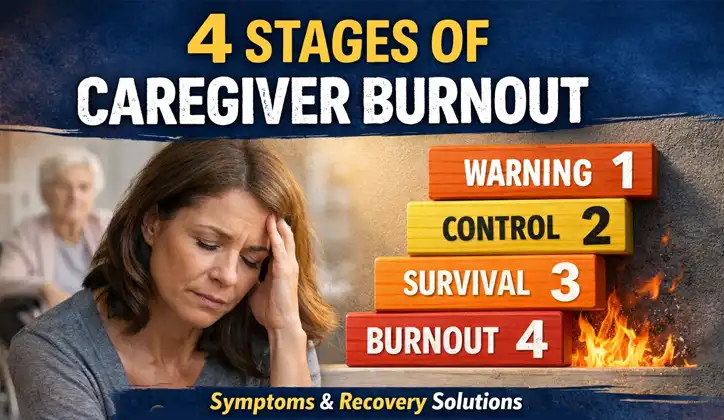
- Honeymoon Stage 2. Onset of Stress 3. Chronic Stress 4. Burnout 5. Habitual Burnout
Our 10 Years of Caregiving Training Experience
In my experience, caregivers can easily overlook early signs. So here are some practical tips:
- Note your energy level every day.
- Make only one self-care task mandatory.
- Share responsibilities with family, even small help makes a big difference.
- Let go of guilt; it’s natural, but unnecessary.
Burnout will stop you. First stop, rest, and get support.
Quick Summary Checklist
- Always feeling tired.
- Irritable mood
- I’m not sleeping well.
- Attention has decreased.
- The body is sick again and again.
- Lost interest.
- Feeling overwhelmed by responsibility
If you have more than 3 symptoms, take action now.
Related Posts