
Caregiver Blog
How to Use the Sundowning Assessment to Improve Evening Routines

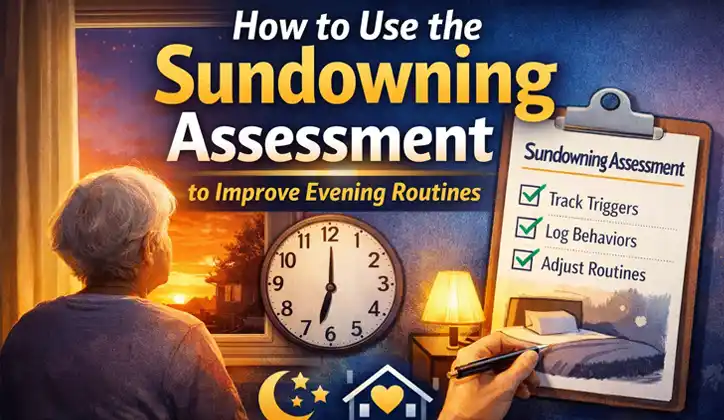
When a loved one has dementia or Alzheimer’s, the afternoon and evening hours can be the most challenging for caregivers. You may have noticed that someone calm during the day becomes restless, irritable, or confused as the sun goes down. This is called Sundowning.
As an experienced caregiver, I know that this problem cannot be solved by following just a few tips. To truly understand what’s happening and why, you need a data-driven approach. That’s exactly why learning how to use the Sundowning Assessment is so important. In this guide, you’ll discover how a structured assessment can help you identify triggers, improve evening routines, and create a calmer, more predictable home environment for your loved one.
What Is Sundowning and Why Are the Hardest
Sundowning is not a disease, but rather a symptom of dementia that typically occurs as daylight hours decrease. Studies have shown that between 20% and 66% of Alzheimer’s patients experience this late afternoon confusion.
According to the US National Institute on Aging, this instability disrupts the patient’s sleep cycle and doubles the stress on caregivers. This time becomes the most difficult for them mainly because the brain’s circadian rhythm (biological clock) is disrupted.
The following behaviors are commonly seen in patients during this time:
- Excessive excitement or anger since afternoon.
- Asking the same questions over and over again or insisting on going home.
- Hallucinations or fear of shadows.
- Wandering.
This time is the most difficult for them because the brain’s circadian rhythm biological clock is damaged.
Why Guessing Doesn’t Work: The Role of a Sundowning Assessment
Most caregivers make mistakes when they try different approaches to guesswork. But guesswork in dementia care never provides lasting solutions. This is where a Sundowning Assessment Tool comes in.
A proper assessment helps you understand:
- At what specific time is the instability starting?
- What sounds or lights are triggering them?
- Are eating habits or lack of sleep to blame?
When you start tracking patterns, your confidence will grow and you will understand exactly where changes need to be made. It is not just a checklist, it is a transparent map of your loved one’s behavior.
Step 1 – Track Patterns Using the Sundowning Assessment
The first step in changing routines is to gather data. Observe your loved one’s behavior for at least a week using a Dementia Behavior assessment tool.
Note the following in your diary:
- Time: Is the unrest starting exactly at 4 pm or at 6 pm?
- Behavior: Is he crying, or is he moving furniture around the house?
- Background: Was the TV too loud? Or were there too many people in the room?
For example, a caregiver noticed that the patient was more restless every Tuesday afternoon. Assessment revealed that on that afternoon, a garbage truck came to their neighborhood, the loud noise of which terrified the patient. This small piece of information was the key to changing the routine.
Step 2 – Identify Common Sundowning Triggers
When you analyze assessment data, you will find some commonSundowning TriggersYou will find. Some common triggers are:
- Light changes: The room is semi-dark or large shadows are formed.
- Physical fatigue: Extreme fatigue in the afternoon as a result of not sleeping all day.
- Sensory overload: The combined noise of radio, TV, and human conversation.
- Hunger or dehydration: Low blood sugar levels often increase confusion.
Step 3 – Use Assessment Insights to Improve the Evening Environment
When analyzing assessment data, you will find some common Sundowning Triggers. Some common triggers are:
Improve Lighting
Before the afternoon, close the curtains and turn on bright lights. This helps reduce shadows in the room and eliminates low-light confusion.
Reduce Noise & Visual Clutter
Turn down the TV volume in the evening. Play calm, slow-paced music if possible. Reduce the amount of clutter on the dining table or living room so that it is not visually distracting.
Create a Familiar, Safe Space
Create a favorite place for the patient with familiar pictures or blankets. Lavender essential oil can be used to create a calming environment that calms the nerves.
Step 4 – Adjust Daily & Evening Routines Based on Assessment Data
The most effective solution is to create a Dementia Evening Schedule based on assessment data. Below is a comparative table:
| Subject | What was before (wrong method) | After the assessment (correct procedure) |
| Afternoon nap | Sleeping for a long time | Short power naps of 20-30 minutes |
| Light | Darkness or low light | Bright enough light (from 4 pm) |
| Food | Late and heavy meals | Light healthy meal before sunset |
| Activities | Noise or watching TV | Playing quiet music or light stories |
- Consistent Schedules: Arrange for bathing, eating, and sleeping at the same time every day.
- Activity Transitions: After 3 pm, reduce stimulating activities and focus on light and relaxing activities.
- Meal Timing: Try to eat your evening meal earlier and lighter. Avoid caffeine or foods with excess sugar in the afternoon.
How to Respond When Sundowning Symptoms Still Appear
Even after doing everything right, sometimes instability can occur. In that case, your response must be extremely patient:
- Speak calmly: Keep your voice low and reassuring.
- Don’t argue: If the patient says something unrealistic, give importance to their feelings without correcting them Validation therapy.
- Distraction: Give him one of his favorite snacks or take him outside to watch birds through the window.
How the Sundowning Assessment Helps You Prevent Wandering at Night
Wandering out of the house at night is a major safety risk. Using the assessment tool, you can understand when patients are most likely to go out. This can help you implement Sundowning Safety Strategies, such as locking doors in advance or installing sensors.
Why Consistent Routines Matter More Than Medication
Many people want to rely on medication to reduce restlessness. However, as experts, we always prefer Non-drug sundowning management. A disciplined routine can be more effective than medication and has no side effects. A regular routine ensures a safe and familiar environment for the patient.
How to Use the Sundowning Assessment as an Ongoing Care Tool
Sundarbans management is not a one-day task. It is an ongoing process.
- Weekly Review: Check your assessment data every weekis the condition improving?
- Share with the doctor: This documentation from you will help the doctor make the right decision at the next appointment.
- Teamwork: If someone else is a caregiver, they should also be included in this structured sundowning assessment tool. Encourage use so that everyone can provide service in the same way.
FAQs about How to Use the Sundowning Assessment
- Is it possible to completely close the Sundarbans?
It may be difficult to stop it completely, but with a proper assessment and routine, its intensity and frequency can be greatly reduced.
- Does the Sundarbans only happen in the afternoon?
It usually occurs from 4 pm to midnight, but the time may vary depending on the patient’s physical condition and triggers.
- Can melatonin help?
In many cases, it helps to regulate circadian rhythms, but you must consult a specialist before use.
Final Thoughts
Serving a loved one is one of the most difficult and noblest jobs in the world. Those restless afternoons can be difficult for both you and your loved one. But with the right information and a disciplined approach, it is possible to transform this chaos into peace.
If you want to improve your loved one’s evening routine starting today, starting with a proper assessment will be the best decision you can make.
Get your Sundowning Assessment Tool here and start making changes today.