
Caregiver Blog
Sensory Assessment Checklist for Adults: A Practical Guide for Caregivers

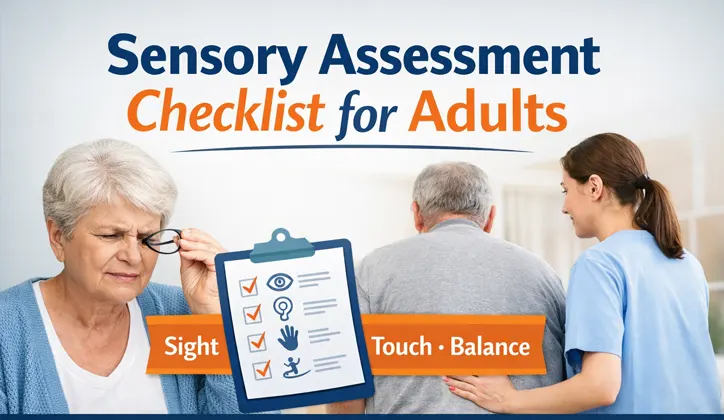
A sensory assessment checklist for adults is a structured tool used by caregivers and healthcare professionals to identify changes in how an adult processes sensory information (sight, sound, touch, smell, taste, and movement). As we age or face neurological conditions like dementia, our sensory systems can become hypersensitive or under-responsive. Using a systematic checklist helps detect sensory impairments early, reduce fall risk, improve communication, and create a safer home environment.
What Is a Sensory Assessment Checklist?
A Sensory Assessment Checklist is a guide for assessing a person’s sensory perception or sensory processing system. Our brain constantly receives various signals or ‘sensory input’ from the environment and reacts accordingly. When there is a problem with this system, the person’s response may be more (Hyper-sensitive) or less (Hypo-sensitive) than normal.
Using an effective checklist can help a caregiver understand which specific senses are not functioning properly. This helps maintain sensory regulation and helps identify unwanted sensory response patterns.
The 6 Key Sensory Systems to Observe:
- Touch (Tactile): Sensation of touch, temperature, or pain through the skin.
- Sound (Auditory): Listening to sounds and being able to distinguish between different sounds.
- Sight (Visual): Getting a sense of light, color, and distance.
- Smell (Olfactory): The ability to detect odors or smells.
- Taste (Gustatory): Feeling the taste and texture of food.
- Movement (Vestibular & Proprioceptive): Concept of body balance and position.
Why Sensory Changes Happen in Adults
There can be multiple reasons behind sensory changes in adults. From an occupational therapy perspective, it is understood that as we age, our neurological pathways become somewhat weaker, which we call sensory decline in older adults.
The main reasons include:
- Aging: It is normal to experience a decrease in eyesight or hearing.
- Neurological Conditions: Neurological diseases such as Parkinson’s or multiple sclerosis.
- Dementia & Alzheimer’s: People with dementia often cannot process sensory input properly, which makes them confused.
- Stroke: A stroke can cause loss of sensation on one side of the body.
- Diabetes: Diabetes can cause peripheral neuropathy, which reduces the sense of touch.
If these sensory impairments in adults are not identified in time, they can lead to major accidents.
Signs Adults May Have Sensory Processing Challenges
Many times, adults are unable to communicate their problems clearly. As a caregiver, you need to watch for certain signs or symptoms of sensory sensitivity:
- Tactile (touch): Feeling extra uncomfortable with clothing tags or the texture of certain fabrics, being annoyed when someone touches you.
- Auditory (hearing): Difficulty speaking in a crowd or finding even ordinary words too loud, sensory overload in adults
- Visual: Blinking in bright lights or being afraid to walk in the dark.
- Vestibular (balance): Inability to control your gait or frequent stumbling while walking.
- Olfactory & Gustatory (smell and taste): Feeling nauseous at the smell of cooking or not being able to taste food, which often increases the risk of eating expired food.
If you notice your loved one doing the same things over and over, such as constantly rocking or rubbing, it could be sensory-seeking behaviour.
Sensory Assessment Checklist for Adults
Below is a comprehensive checklist that you can follow at home. It will also serve as a sensory preference checklist.
Touch
- [ ] Does he/she get startled or irritated by a light touch?
- [ ] Avoid certain textures (such as wool or sticky foods)?
- [ ] Is he unusually tolerant of pain or temperature (can’t feel anything very hot when touched)?
Hearing
- [ ] Is he losing focus on speaking because of any background noise?
- [ ] Does he/she get startled by sudden noises (such as a vacuum cleaner or telephone)?
- [ ] Does he repeatedly speak loudly when speaking?
Vision
- [ ] Does he/she squint while reading or walking?
- [ ] Does he feel uncomfortable in bright sunlight or fluorescent light?
- [ ] Does he have trouble finding objects in familiar places?
Movement & Balanc
- [ ] Does he lose his balance easily?
- [ ] Does he slouch or need head support when sitting?
- [ ] Is he very afraid of walking on high or low places?
Smell & Taste
- [ ] Does he react unusually to familiar scents or food smells?
- [ ] Is he only looking for very strong-tasting or overly salty foods?
- [ ] Has he stopped eating certain foods because of the texture?
Note: Keep this checklist in a diary and review it regularly. It will be invaluable when discussing with your doctor or therapist.
How Caregivers Can Use a Sensory Checklist
A caregiver sensory assessment is not just a paper-and-pen task, it is a life-saving practice. The correct rules for using it are:
- Home Observation: Observe his behavior during daily routines such as bathing or feeding.
- Identify Triggers: Note the environments in which he becomes most restless. Maybe he becomes more irritable when the kitchen stove is running.
- Environment Audit: Use this checklist to change the environment in your home. For example, use curtains if the light is too bright or lay carpet on the floor to prevent it from slipping.
The more accurate the data in your sensory observation checklist, the higher the quality of your service.
How Sensory Challenges Affect Daily Life
Ignoring sensory problems can wreak havoc on daily life. In the USA, millions of older adults fall and injure themselves every year, one of the causes of which is vestibular impairment.
- Safety Risks: Not being able to sense the touch of hot water or fire can cause serious burns.
- Communication Problems: Hearing problems create distance from loved ones, leading to loneliness.
- Emotional Regulation: When the brain cannot tolerate the surrounding environment, it is normal to lose mood or become depressed.
- Medication Mistakes: Taking the wrong medication for eye problems is a huge risk factor.
If you improve your caregiving communication skills, then buy our Printable Caregiver Communication Skills Workbook.
Tools That Help Caregivers Track Sensory Changes
Relying on memory or simple observation is not always safe. Experienced caregivers always recommend using structured tools or tracking systems.
If you are a dedicated caregiver, we have created the Sensory Deficit Workbook for you. This is not just a checklist, but a full-fledged tracking system.
Why do you need this workbook?
- It includes expert-created sensory tracking worksheets.
- Simple graphical charts to track long-term changes.
- Profile creation facility to ensure the safety and comfort of your loved ones.
Many of our users have reported that using this caregiver sensory workbook made their doctor’s appointments much more productive because they had all the information organized in advance.
When to Seek Professional Help
If you tick too many boxes on your checklist, it’s important to seek expert advice. Especially when:
- Suddenly, a sense stops working completely.
- He became aggressive due to sensory overload.
- He is repeatedly falling due to an imbalance.
An Occupational Therapist (OT) can best help in this case. It would also be wise for adults to undergo a sensory evaluation by a neurologist or geriatric specialist.
FAQs about Sensory Assessment Checklist
What is a Sensory Assessment Checklist?
It is a tool used to identify the functioning and changes in vision, hearing, touch, and other senses in adults.
What are the symptoms of sensory processing problems in adults?
The main symptoms are hypersensitivity to sound, imbalance, discomfort with the texture of clothing, and loss of taste or smell in food.
Can sensory problems increase with age?
Yes, sensory deficits can gradually become apparent due to aging and neurological diseases (such as dementia).
How can sensory problems be solved at home?
Identify the problem using appropriate tools, such as the Sensory Deficit Workbook, and make changes to the home environment accordingly, such as using noise-cancelling headphones or soft lighting.
Conclusion
Understanding your loved one’s sensory needs is the first step to proper care. By regularly using a Sensory Assessment Checklist for Adults, you will not only reduce their suffering but also protect them from potential major accidents.
Remember, awareness is the key to caregiving. To make your journey easier and ensure a safe environment for your loved one, pick up our Sensory Deficit Workbook today. One right decision from you can bring immense peace of mind to their final days.
Do you have any special experiences that could help other caregivers? Let us know in the comments below!