Caregiver Blog
Why Do Dementia Patients Refuse Medication? 11 Common Reasons and Practical Solutions for Caregivers

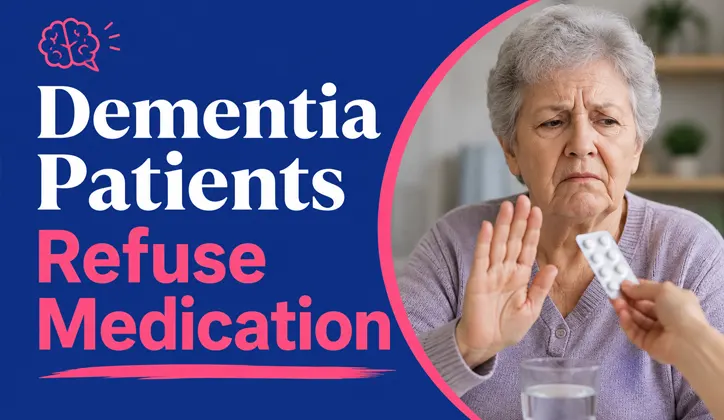
Caring for a loved one with dementia becomes especially challenging when they refuse medication. While this behavior may seem stubborn, it is often caused by memory loss, confusion, fear, difficulty swallowing, or a lack of awareness of their condition. Understanding the reason behind medication refusal is the key to finding effective solutions. In this guide, you’ll learn why dementia patients refuse medication and discover practical caregiver strategies to make medication management safer and less stressful.
Why Medication Refusal Is So Common in Dementia
The behavior of dementia patients not wanting to take their medication is not a deliberate act of disobedience. Due to cognitive decline or the continuous deterioration of mental capacity, their brain function continues to decrease day by day. As a result, they do not understand what is being done for their good and what is harmful.
There are 4 main reasons why this medication is more likely to be refused in dementia:
- Brain Changes: Dementia damages the logical thinking part of the brain, making it difficult for people to process even the simple question of why medication is needed.
- Lack of judgment: Patients lose the ability to judge what is right and what is wrong. A colorful capsule or a bitter pill may seem unnecessary or dangerous to them.
- Communication Difficulties: Many times, when they feel discomfort or pain in their body, they cannot express it verbally. This inner pain is expressed externally by refusing medicine or Behavioral problems.
- Loss of Awareness / Anosognosia: This is a mental state where the patient does not even realize that he is sick. Since he thinks he is healthy, he completely denies the need to take medicine.
11 Reasons Dementia Patients Refuse Medication
The first step to finding the root cause of why a person with dementia is not taking their medication is to identify it. Below are 11 common reasons and their practical solutions:
Reason #1: They Don’t Believe Anything Is Wrong
Patients with dementia or Alzheimer’s disease often believe they are completely healthy. In medical terms, this is called ‘Anosognosia’.
- Symptoms: When you give them medicine, they may get angry and say, “Why should I take medicine? I don’t have any illness!” or “You’re forcing me to get sick.”
- Caregiver Solution: In this situation, never argue with the patient or try to convince them that they have memory loss. Arguing will only increase their confusion. Instead, calmly say, “This is a vitamin to keep your body strong” or “The doctor gave it to you to help you sleep better.” Explain the purpose of the medicine simply by using a name they know and trust.
Reason #2: Fear of Side Effects
Patients often can’t remember how they felt after taking a medication, but they can remember a negative feeling. Maybe a medication in the past made them dizzy or upset.
- Examples: Upon seeing the medicine, the patient may panic, throw the medicine away with their hands, or close their mouth tightly.
- Caregiver Solution: Keep a medication diary to track any side effects. If you notice that your child is becoming more restless after taking a particular medication, contact your doctor or healthcare provider immediately. If necessary, ask your doctor to change the dosage or brand of the medicine so that there is no physical discomfort.
Reason #3: Difficulty Swallowing Pills
As people age and as dementia progresses, many develop difficulty swallowing, or dysphagia. Swallowing large tablets or hard capsules can cause choking, such as getting them stuck in the throat.
- Warning Signs: Sitting with the medicine in your mouth for a long time, spitting it out, coughing while swallowing, or watery eyes while swallowing the medicine.
- Caregiver Solution: Do not force the patient to swallow hard pills. Ask your doctor if you can crush the tablet or open the capsule and give it orally. If allowed, mix the medicine with applesauce, pudding, or a little honey. If possible, ask your doctor to prescribe a liquid alternative to the medicine.
Reason #4: Memory Loss and Confusion
Due to memory loss, patients forget that they agreed to take the medication just minutes ago. Each time the medication is brought up, it feels like a completely new and unfamiliar situation to them.
- Explanation: They may think you are giving them the same medicine 5-6 times a day, which creates deep confusion and fear in their minds.
- Caregiver Solution: Keep the environment quiet while giving the medicine. Turn off the TV or radio so that there are no distractions. Use the same simple sentence each time you give the medicine, such as: “Mom, here’s your morning water.” Don’t hold the medicine container in front of their eyes for too long, as this can make them nervous.
Reason #5: Depression or Anxiety
Depression or severe anxiety often goes hand in hand with dementia. When the mind is not well, or the will to live is lost, patients stop all cooperation, the first manifestation of which is not taking medication.
- Explanation: Patients may think to themselves, “What will happen if I take the medicine? I won’t get better.” From this mental anguish, they may choose a treatment plan or refuse treatment.
- Caregiver Solution: Do not neglect their emotions. Sit next to them with utmost care, hold their hand. A loving touch reduces mental anxiety to a great extent. If necessary, seek the advice of an experienced psychiatrist or dementia coach to improve their mental health. Sometimes, if we do not take proper care of our mental health, a situation like Caregiver Burnout Recovery arises, which also harms patient care.
Reason #6: Desire for Independence
People with dementia gradually lose control of their lives. When someone else decides when to eat, where to go, what to wear, everything- their self-esteem suffers. By refusing medication, they are essentially trying to maintain their independence.
- Explanation: They don’t want to take medicine because of the mentality of “I will make my own decisions.” If you force them, the situation will get worse.
- Caregiver Solution: Give them some freedom or choice without imposing orders on them. For example, you can ask, “Mom, do you want to take the medicine with water or with fruit juice?” or “Do you want to take the medicine sitting on the couch or on the balcony?” This will make them feel like the decision is theirs and they will be more likely to agree.
Reason #7: Medication Fatigue
When a person has to swallow a bunch of capsules and tablets three times a day, a kind of fatigue naturally sets in. This is called ‘medication fatigue’.
- Explanation: Who likes to take medicine after medicine all the time, morning, noon, and night? Patients are tired of this annoying medication routine. Want to get rid of.
- Caregiver Solution: Review your medication list with your doctor. Sometimes, some supplements or medications are not essential and can be eliminated. Ask your doctor to reduce your treatment to a smaller number of medications or to medications that you only need to take once a day.
Reason #8: Delusions or Paranoia
In the middle and late stages of dementia, patients often suffer from various hallucinations or paranoia, or irrational suspicions. They may begin to view the people around them, even their own children or spouses, as enemies.
- Explanation: They may think that the medication you are giving them is actually a poison or is being given to harm them. This intense fear is what causes dementia refusing medication.
- Caregiver Solution: Never get angry when faced with this type of fear. First, calm their fear. Say, “I love you so much, I would never let you get hurt.” Sometimes, take a sip from the food or glass of water yourself first to show them that it is safe. Building trust is the key here.
Reason #9: Bad Timing
There are times of day when dementia patients are very irritable, such as in the afternoon when ‘sundowning’ or twilight syndrome sets in. They can react violently if given medication at this time.
- Explanation: When the body is tired or it is time to sleep, it cannot tolerate any new instructions or taking medication.
- Caregiver Solution: Try to give important medications when the patient is calmest and most alert (usually in the morning). If taking evening medications is a daily hassle, talk to your doctor about shifting it to the afternoon or another time. For specific strategies to manage this type of sundowning problem, you can follow our Sundowning Workbook.
Reason #10: Communication Mistakes
Many times, the way we tell patients to take their medications is wrong. If we tell them in a rush or threatening tone, patients panic and throw away the medication as a defensive behavior.
- Explanation: “Take your medicine quickly, I have a lot of work to do” this kind of urging creates stress in dementia patients. They can understand your tone of voice and body language more than your words.
- Caregiver Solution: Always maintain eye contact and speak in a soft tone with a smile. For the correct rules of calm and compassionate communication or elder care, see our Compassionate Care 101 guide. Your calm demeanor will reassure the patient.
Reason #11: Undiagnosed Medical Problems
The patient may be suffering internally due to a mouth sore, toothache, stomach ulcer, or constipation. The pain or discomfort increases after taking the medicine, so they shy away from the medicine as soon as they see it.
- Explanation: They can’t say with their mouths, “I can’t chew the pill because my tooth hurts,” so they simply refuse the medicine.
- Caregiver Solution: Check their mouth, gums, and teeth regularly. Pay attention to any discomfort they experience when eating. If they suddenly develop a strong aversion to taking medication, consult a doctor to rule out any underlying medical condition or infection (such as a UTI or urinary tract infection).
An important realisation:
Many caregivers think that the reason a dementia patient doesn’t take their medication is just their own stubbornness. But in reality, it’s because of profound brain degeneration, communication difficulties, and emotional fear. When you understand these root causes, you’ll be able to move from anger to empathy.
If you are tired of the battle of taking these medications every day and want a permanent solution, our specialised Medication Refusal in Caregiving guide can provide you with step-by-step, effective strategies and realistic solutions.
How Do You Get a Dementia Patient to Take Medication?
If your loved one refuses to take their medication right away, you can follow these scientific and proven methods to immediately bring the situation under control. These simple steps will help you develop a successful medication management plan for dementia patients.
- Stay Calm: Your anger or frustration will only make the patient more restless. Take deep breaths and keep your mind calm.
- Avoid Arguments: “You’ll die if you don’t take your medicine” or “The doctor told you to take it”any of these types of arguments will not work with a dementia patient.
- Use simple and short sentences (Simplify Instructions): Give one instruction at a time. For example: “Mom, take the medicine.” Then, “Now drink some water.”
- Create a specific routine (Create Routines): Develop a habit of giving medication at the same time, in the same place, and by the same familiar person every day. Routine provides a sense of security for dementia patients.
- Talk to Healthcare Providers: Seek medical advice to change the size, taste, or timing of your medication.
- Address Underlying Fears: If they have any doubts about the water in the cup or the medicine, provide loving reassurance to clear them up.
| Do’s | Don’ts |
| Speak softly and in a low voice. | Don’t yell or scold. |
| Mix medication with food (subject to permission) | Force the medicine into your mouth. |
| Praise small successes. | Express your frustration or anger in front of them. |
Warning Signs That Require Medical Attention
As a caregiver, it’s important to know when not taking your medication can turn from a simple problem to a serious emergency. If you experience any of the following symptoms, seek medical attention immediately:
When should you contact a doctor immediately?
- If the patient is consecutive, more than 48 hours, do not take any essential medications (such as heart, diabetes, seizure, or blood pressure medications).
- If the patient experiences severe changes in behavior, excessive aggression, or hallucinations after completely stopping the medication.
- If the patient is completely unable to swallow even liquids or watery foods (extreme stage of dysphagia).
What Caregivers Should Never Do:
- Concealing medication without a doctor’s permission: Crushing pills into food without informing the patient is not safe for all medications. It can reduce the effectiveness of some medications or cause toxicity in the body.
- Physical force or blackmail: Do not try to administer medication by forcefully holding the patient or making them open their mouth. This can cause the medication to enter the lungs and cause ‘aspiration pneumonia’, which is life-threatening.
A helping hand:
Dementia care is not a solitary endeavor. To relieve the mental and physical stress of daily life and get the right guidance, you can contact our experienced consultants directly through Caregiving Expert Consulting. We are here to make your journey easier
FAQs about Dementia Patients Refuse Medication
Why do dementia patients suddenly stop taking their medication?
As dementia progresses, patients’ cognitive function declines. They forget what the medication is and why it is needed. They may also suddenly stop taking the medication because of irrational fears, such as the bitter taste of the medication, difficulty swallowing, or thinking the medication is poisonous.
2. Can dementia force someone to refuse treatment?
Yes, dementia causes profound changes in the personality and behavior of the patient. Due to a symptom called ‘anosognosia’, patients may not even realize that they are sick. As a result, they may strongly refuse to take any kind of treatment or medication.
Should dementia patients be force-fed medication?
Absolutely not. Forcing the patient to take medication will make them lose trust in you and make them more aggressive in the future. In addition, forcibly taking the medication can cause serious physical risks such as choking or pneumonia if the medication gets stuck in the airway.
What should I do if my mother with Alzheimer’s does not want to take medication?
First, try to figure out the causeis he having trouble swallowing or is he afraid? Keep the environment calm, speak in short sentences, and present the medicine in a positive light, such as a ‘vitamin’ or ‘strengthening thing.’ If necessary, seek medical advice to find an alternative to liquid medicine.
When does medication refusal become an urgent medical concern?
When life-saving medications (such as insulin, blood thinners, or heart medications) are consistently missed and this results in the patient’s physical condition deteriorating, causing palpitations or severe fluctuations in blood sugar levels, it is an emergency medical concern.
Free Self-Assessment: Is your loved one’s refusal of medication dangerous?
Answer the following questions with yes or no:
- 1. Does your loved one refuse to take medication almost every day? [Yes / No]
- 2. Does he become more angry or aggressive than before when talking about taking medication? [Yes / No]
- 3. Have any emergency doses already been missed due to medication refusal? [Yes / No]
- 4. Do you suffer from severe mental stress while taking medication every day? [Yes / No]
Results: If you answered 2 or more questions “Yes”, it’s clear that it’s becoming difficult for you to handle this situation alone. This daily emotional battle is damaging to both you and your loved ones.
Need More Help Managing Medication Refusal?
If medication refusal is causing major daily emotional distress for your family, collect our digital guide today.
Our Medication Refusal in Caregiving special guide is designed to provide you with practical and easy-to-implement solutions. In this guide, you’ll find proven communication strategies from experienced caregivers, effective ways to change behavior, and medication management secrets that will turn your daily struggles into peaceful habits. Keep your loved ones safe and regain your peace of mind.
Related Posts