
Caregiver Blog
Caregiver Back Pain Prevention Guide: Modern Safety Framework to Protect Your Back

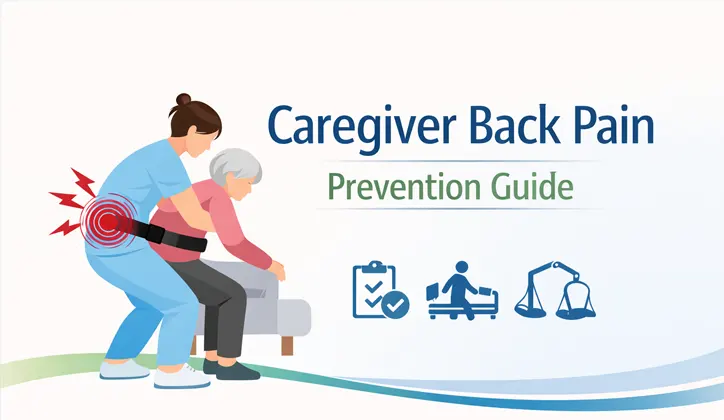
Caregiving is a great profession, but statistics show that about 60–70% of caregivers suffer from severe back pain at some point in their careers. Day after day, tasks like lifting a patient out of bed, transferring them to a wheelchair, or assisting with bathing put constant pressure on the spine. That’s why caregiver back pain prevention is not just a tipit’s a necessity for long-term safety and career sustainability
In my 26-year career as a Certified Caregiving Expert, I have seen many skilled caregivers leave the profession due to small but critical technique mistakes. In today’s guide, I’m sharing a complete Body Mechanics System based on real-life experience designed to help you prevent injuries, protect your back, and continue caregiving with confidence.
Why do caregivers suffer from back pain?
Most caregivers think back pain is a sign of aging, but it’s actually the result of improper body use. We need to dig deeper into why our backs can’t take this load.
Back pain doesn’t happen suddenly; it’s basically the result of a long-term series of small mistakes. The main causes of back pain in caregiving are:
- Awkward Posture: Holding the patient while hunched or bent.
- Repetitive Strain: Doing the same type of heavy work repeatedly every day.
- Sudden Movements: Injuring your own spine while trying to catch the patient if they suddenly fall or lose their balance.
- Burnout link: When you are mentally tired, your muscles are not relaxed, which increases the risk of injury.
Our Managing Expectations of Caregiving and Caregiver Burnout Prevention resources can be very helpful in understanding the right balance of physical and mental stress for caregivers.
7 Effective Techniques to Prevent Back Pain
As a certified expert, I always say, Work smarter, not harder. The following 7 methods I’ve practiced thousands of times myself and they reduce the risk of injury by up to 80%:
- Lift with your legs, not your back: Keep your back straight and bend your knees when lifting weights. Your leg muscles (quads) are much stronger than your back.
- Keep the patient close to the body: The further away the patient or weight is from your body, the more pressure will be placed on your spine.
- Stop Twisting: Never rotate your waist with the weight. If you need to rotate, rotate your entire leg to change position.
- Maintain a Neutral Spine: While working, the spine should be in the normal English ‘S’ shape.
- Strengthen the foundation: When standing, keep your feet shoulder-width apart (Wide Base of Support). This will help you maintain balance.
- Adjust the bed height: When caring for a patient, bring the bed to your waist or hip level.
- Use helpful tools: Don’t hesitate to use slide sheets, gait belts, or mechanical lifts.
Our special guide, Body Mechanics for Caregivers, will give you practical knowledge.
Step-by-Step Safe Transfer Guide: Transferring from Bed to Chair
Transferring a patient is one of the most risky tasks in caregiving. Follow my checklist to ensure your own safety and that of the patient during this procedure:
- Environmental preparation: Bring the chair close to the bed and lock the brakes. Make sure there are no obstacles in your way.
- Body positioning: Stand in front of the patient, balance with your feet apart and your knees slightly bent.
- Add patient: Tell the patient how they can help you (e.g., by holding your shoulder).
- Lift and Pivot: Lift the patient and turn using the legs (not the waist).
- Controlled placement: Slowly place the patient in the chair. Do not rush.
To ensure safe housing, you can buy and follow the Home Safety for Seniors Workbook.
Daily routine to protect your back
Preventing injuries involves not only being mindful while working, but also preparing your body accordingly. A professional caregiver’s daily routine should include:
- Before work (Warm-up): Activate your muscles by doing light stretching so that they are ready to take the load.
- Working hours (Awareness): Before lifting a patient, remind yourself to bend your knees and keep your back straight.
- After work (Recovery): Take a warm bath or use a foam roller to relieve muscle fatigue.
To make your work environment easier, our Home Organization for Caregivers module is very effective.
5 Signs of Caregiver Burnout (Which Leads to Injury)
I have seen many caregivers who have suffered physical injuries after suffering an emotional breakdown. Burnout destroys your focus and paves the way for injury:
- Excessive fatigue that persists even after adequate sleep.
- Feeling unreasonable resentment or anger towards the patient.
- The onset of chronic pain in various joints or muscles of the body.
- Lack of attention – this is when most accidents or wrong movements occur.
- Unreasonable guilt or Caregiver Guilt. This is why you don’t take care of yourself.
If you already have back pain, what should you do?
Pain is your body’s way of signalling you that something is wrong. It’s important to know what to do and when to stop in this situation:
- Rest vs. Movement: Get complete rest for the first 24-48 hours, but don’t keep your body completely still. Light movement helps blood circulation.
- Therapy: Consult a physical therapist who will provide exercises tailored to your work style.
- When should you see a doctor? If the pain radiates down the leg, numbness occurs, or the pain does not subside, seek medical attention.
Mistakes Most Caregivers Make and Solutions
I have seen many experienced caregivers make the same mistakes year after year. These mistakes, while seemingly small, are the root cause of major injuries:
- Wrong: Hastily lift the patient. Solution: Take 5 seconds to adjust your position before transferring.
- Wrong: Overconfidence to do everything alone. Solution: Ask for help or use a lifting device if necessary. Improving caregiver communication skills makes it easier to get help from others.
Correct solution: Learn the Body Mechanics system.
A few isolated tips may help you temporarily. Still, you need to learn a proper ‘system’ to ensure professional safety. Working with the wrong technique is like gambling with your career.
Our goal is to build a long-lasting caregiving career while keeping your body safe. Body Mechanics for Caregivers: The course is designed not just as a guide but as a summary of the long experience of an expert.
FAQs about Caregiver Back Pain Prevention
What are the three main symptoms of caregiver stress?
The three main symptoms are – constant physical and mental fatigue, irritability and insomnia. Use the strategies of Caregiver Burnout Prevention to prevent this.
How can I protect my back as a caregiver?
Always use your leg muscles, keep your spine straight, and keep the patient close to your body. Regular practice of body mechanics is also mandatory.
How long does caregiver burnout last?
It depends entirely on how quickly you start self-care. If you don’t follow the right approach, it can lead you to depression.
What is caregiver guilt?
Feeling guilty for your own rest. Remember, if you are not healthy, your patient is not safe either. Read Letting Go of Unrealistic Expectations to overcome it.
Last words
Your body is your livelihood and a means of service. Only when you are healthy can you keep others healthy. So, learn to understand your body’s signals from today and start moving in the right way.
Get our Body Mechanics for Caregivers Complete Solution today for a safe caregiving life. Remember, awareness is the best medicine to avoid injury.