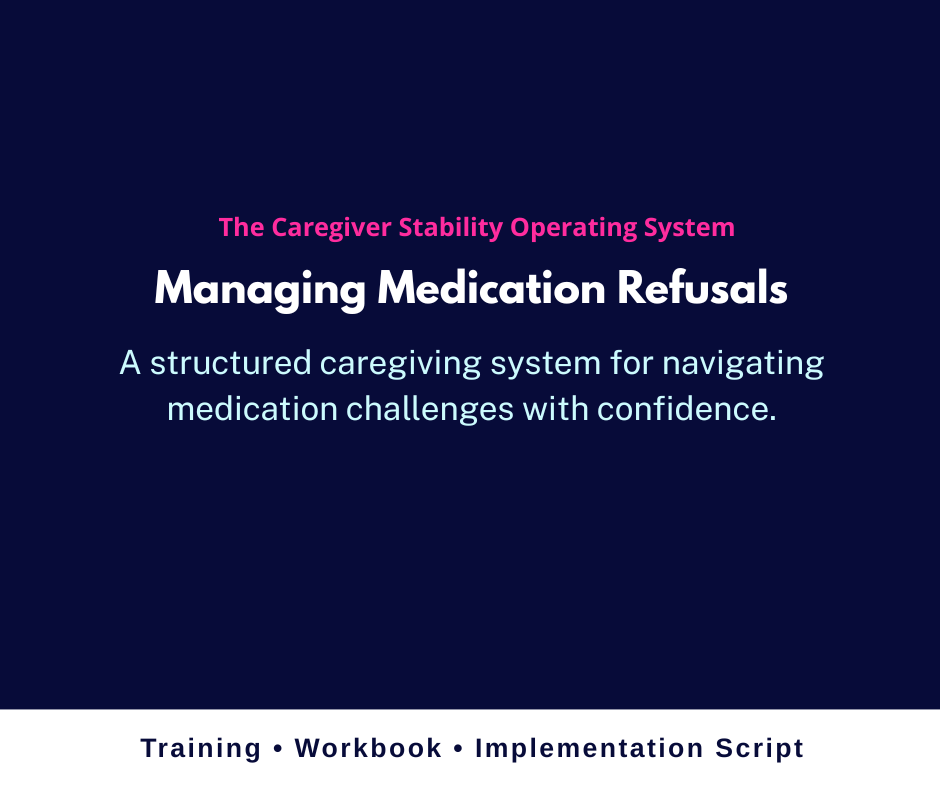
Medication Refusal in Caregiving is one of the most frustrating and emotionally charged challenges a family caregiver can face. When a loved one rejects prescribed treatment, it creates an immediate health risk—compromising recovery, worsening chronic conditions, and damaging the bond between caregiver and recipient.
What to Do When a Loved One Refuses Their Medication is a comprehensive digital workbook designed to help you navigate these high-stakes moments. This resource provides the tactical tools and psychological insights needed to resolve resistance while preserving the trust, dignity, and safety of your loved one.
Why Addressing Medication Resistance is Critical
Attempting to force compliance often backfires, leading to greater defiance and caregiver burnout. A strategic approach to medication refusal allows you to:
Identify Root Causes: Determine if the refusal is driven by fear, side effects, cognitive decline, or a desire for autonomy.
Protect Medical Outcomes: Ensure that treatment plans remain effective and prevent avoidable hospitalizations.
Lower Daily Tension: Replace exhausting power struggles with calm, structured routines that encourage participation.
Empower the Caregiver: Move from feeling helpless to feeling equipped with professional-grade intervention strategies.
What is Waiting for You Inside This Guide?
This toolkit addresses the complexities of medication management through a multi-lens approach:
1. Understanding the Psychology of Refusal
Explore the emotional and physical factors that lead to resistance. Learn to distinguish between a temporary mood and a deeper cognitive or sensory issue, such as difficulty swallowing or fear of a specific pill.
2. Compassionate Communication Scripts
Access word-for-word scripts designed to de-escalate tension. Learn how to use active listening and validation to help your loved one feel in control of their health decisions rather than forced into them.
3. Tactical Management and Reminders
Discover the best systems for organizing complex schedules. From smart pill organizers to digital reminders, we show you how to build a environment that minimizes the friction of taking medicine.
4. Partnering with Healthcare Professionals
Learn exactly when and how to involve a doctor or pharmacist. We provide tips on advocating for alternative formulations (such as liquids or patches) when oral pills become a persistent barrier.
5. Managing Your Own Caregiver Stress
Medication battles are draining. This section provides quick-relief techniques for caregivers to maintain their composure and mental health during difficult moments.
The Integrated Caregiver Success System
Medication adherence is easier when the rest of the caregiving environment is optimized. Enhance your results with these essential pairings:
Safety First: A safe home reduces the overall anxiety that can lead to refusal. Pair this guide with Home Organization for Caregivers to create a dedicated, calm medication station.
Coordinate the Care: Track the results of your new strategies with the Caregiving Plan of Care, allowing you to show medical providers exact data on adherence.
Clear Communication: Master the general art of dialogue with our Caregiver Communication Skills Guide to build the foundation of trust needed for medical cooperation.
Benefits of the Medication Toolkit
Immediate Conflict Resolution: Practical tips to help you manage a refusal the moment it happens.
Improved Health Trajectory: Consistent adherence leads to more stable health for your loved one.
Strengthened Relationships: Rebuild the bond of trust by removing the daily battleground of the medicine cabinet.
Data-Driven Advocacy: Be prepared to give doctors specific feedback on why a certain medication is being resisted.
Expert Guidance and Clinical Support
Developed by The Ultimate Caregiving Expert with over 25 years of experience, this guide aligns with medication safety standards from the Mayo Clinic and AARP. For personalized assistance, you can also contact us for free consultations.
Join a Community of Support
You do not have to solve these challenges in isolation. Join our Family Caregiving Group to share what is working for you, ask questions about specific medication tools, and find encouragement from peers who have been exactly where you are.
Reviews
Clear filtersThere are no reviews yet.