
Types of Hoarding Disorders: A Detailed Guide for a Caregiver

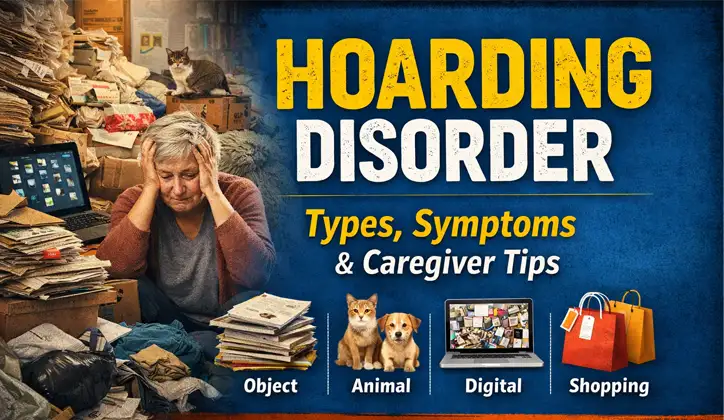
Hoarding Disorder is not just a messy behavior, it is a complex mental health problem. It can generally be divided into 5 main categories based on the types of hoarding of material objects, animals, or digital information. With proper care and therapy, this problem can be controlled.
Have you noticed your loved one grabbing things that others would consider junk? It’s important for a caregiver to understand the difference between normal messy behavior and a hoarding disorder. It’s not just about keeping the house messy, but it’s also a sign of deep emotional distress and loss of function.
According to statistics, about 2% to 6% of the world’s population suffers from this problem. In most cases, it is associated with issues such as depression, OCD or social isolation. As expert caregivers, we need to understand why they cannot let go of these things and how to help them with compassion.
What is Hoarding Disorder?
Hoarding Disorder is the experience of extreme difficulty in throwing away or abandoning the illusion of an item, regardless of its actual value. According to DSM-5 (Diagnostic and Statistical Manual of Mental Disorders), it is a distinct mental illness.
According to the International OCD Foundation (IOCDF), it is different from just being a hobbyist. When a person’s hoarding of things takes over their daily activities, cooking, or sleeping space and disrupts the normal functioning of life, it is called a hoarding disorder. It causes severe anxiety and social isolation in the person.
Types of Hoarding Disorders: Different Types
I am Tena Scallan, and have been helping family caregivers deal with emotional and physical challenges for over 25 years. From my own experience caring for 5 family members, I know how isolating and confusing issues like hoarding can be. Based on my experience, the following are some of the types of hoarding that I have experienced:
1. Object Hoarding
This is the most common type. The affected person hoards newspapers, clothes, food packets, books, or general broken objects. Some of the subtypes include:
- Sentimental Hoarding: Not being able to throw away anything that is associated with memory.
- Deprivation Hoarding: Fear that these things may not be available in the future, stemming from past deprivations.
- Selective Hoarding: Consigning to a specific category (such as just old plastic or magazines).
2. Animal Hoarding
When someone starts keeping more animals (dogs, cats, etc.) at home than they can afford, it is called animal hoarding.
- Symptoms: Lack of adequate food, medical care, or a healthy environment for animals.
- Motivation: They consider themselves ‘animal rescuers’, but in reality, the animals are victims of neglect and malnutrition.
3. Digital Hoarding
This is a growing problem in the current era. Storing thousands of unnecessary emails, duplicate photos, files, and apps that fill up the device’s storage is one of the main causes of mental instability and loss of focus.
৪. Compulsive Shopping / Acquisition
In this case, the person is addicted to buying unnecessary things or collecting free things (leaflets, samples). This leads to serious financial difficulties and a pile of things in the house.
Why do people hoard?
Many people ask, Why aren’t they cleaning these? There are deep psychological reasons behind this:
- Emotional attachment: Attaching a special memory or feeling to each object.
- Lack of security: To prepare oneself for any future disaster or shortage.
- OCD and Anxiety: Fear of losing something or a superstitious belief that something bad will happen if you throw it away.
- Control or control: An attempt to gain some kind of artificial control over the environment around you.
5 levels of Severity Hoarding
The table below will help you, as a caregiver, understand the depth of the problem:
| Level | Severity of symptoms | Housing conditions and health risks |
| Level 1 | A little | The house is clean, but the number of unnecessary things is increasing. There is no bad smell. |
| Level 2 | Notable | At least one corner of the room or piece of furniture is unusable. Slight odour or dust. |
| Level 3 | Medium | The walkways inside the house become narrow. It becomes difficult to use the kitchen or bathroom. |
| Level 4 | Serious | Cracks in the walls or electrical problems. Rotten food or insects can be seen. |
| Level 5 | Extreme crisis | Severe risk of house fire. Uninhabitable environment and extreme unsanitary conditions. |
Its relationship with other mental conditions
Hoarding disorder does not usually occur alone. Studies have shown that it can be associated with co-occurring disorders such as depression, ADHD, and social anxiety. It can also appear as an early symptom of dementia or Alzheimer’s, especially in the elderly.
Management and tips for caregivers
Hoarding management is a long-term process. Here are some effective tips:
- CBT (Cognitive Behavioral Therapy): This is currently the most effective treatment where attempts are made to change the person’s thinking patterns.
- Show empathy: Try to understand them without getting angry with them. Yelling at them will only make them withdraw more.
- Professional help: Seek help from a professional organizer and therapist if necessary. Using our specialized Hoarding Workbook and create an actionable plan from home.
- Ensuring safety: Make sure your home is fire-safe. You can get tips for safely cleaning your home with our Caregiver Support Tools.
FAQs about Types of Hoarding Disorders
Is hoarding a mental illness?
Yes, it is a recognized mental disorder according to DSM-5 that can be related to OCD.
Is there any medicine to cure hoarding?
There is no magic pill for hoarding outright, but doctors can prescribe anti-depressants to reduce the depression or anxiety that accompanies it.
How do I know if my loved one has this disease?
If a pile of things disrupts the normal functioning of the house and the person feels intense mental stress to remove it.
Conclusion
Understanding types of hoarding disorders is not only necessary for cleaning the house, but also for reducing the emotional suffering of the affected person. With patience and the right scientific approach, it is possible to get rid of this curse. If you are facing such challenges as a caregiver, remember that you are not alone. Our resources and guides are ready to guide you on this path.