
How To Help Our Loved Ones Who Have Undergone Knee Surgery


Seniors who have undergone knee surgery often face challenges related to degenerative arthritis or weakened bones. Chronic knee pain and reduced mobility can significantly impact daily life, making even simple activities difficult. While medications and therapy may help in the early stages, many seniors eventually require knee replacement surgery to restore function and reduce discomfort. In this guide, we’ll cover what to expect before, during, and after surgery, along with practical tips for caregivers to ensure a safe, comfortable, and effective recovery.
Why Knee Surgery Becomes Necessary
With advancing age, degenerative arthritis and reduced bone health often impair mobility in seniors. Knee pain and joint stiffness are common symptoms. While medications and therapies can help in early stages, persistent pain or loss of mobility may make knee replacement surgery the recommended solution.
Essential Tips to Keep in Mind Before Knee Surgery
According to the American Academy of Orthopaedic Surgeons, total knee replacement surgery restores mobility in approximately 90% of seniors with osteoarthritis when proper rehabilitation is followed. However, seniors undergoing surgery should keep realistic expectations despite a drastic reduction in pain. While knee replacement improves mobility and reduces pain, seniors may not immediately feel fully healthy. Maintaining realistic expectations supports emotional well-being and recovery. Seniors are still unable to feel as healthy as they were before. Furthermore, having unrealistic hopes becomes the primary cause of depression for seniors. When they cannot gain complete control over their mobility within a week. Maintaining realistic expectations helps seniors manage stress, supporting emotional well-being and accelerating recovery after knee surgery.
Understanding the Surgery
Knee replacement surgery involves general anaesthesia. They then removed the damaged part of the knee, replaced it with artificial material, and attached it to the thigh bone (femur). The recovery period depends on the type of technique used. In some cases, minimally invasive procedures require a shorter recovery period. This, however, depends on the condition of the patient and the extent of knee damage. Patients who undergo surgery on both knees require a more extended recovery period. Dealing with pain and restricted mobility post-operation.
What to Expect from your surgery
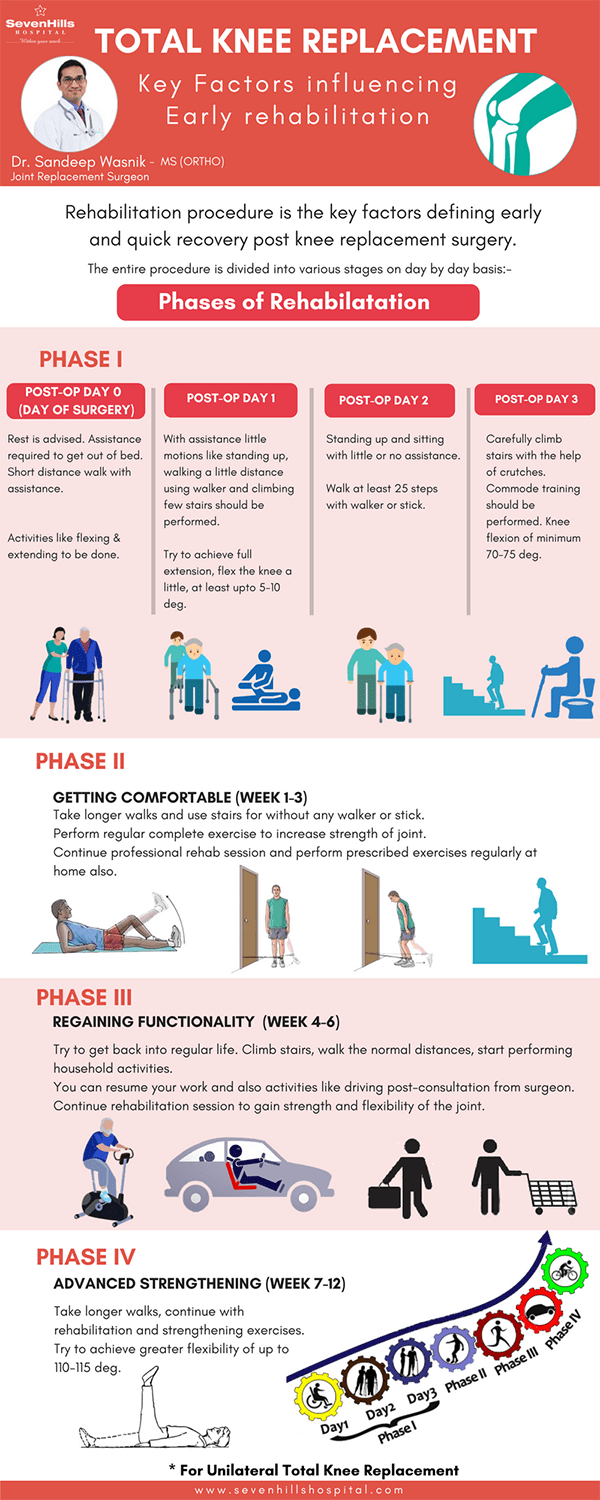
Standing up on your feet after knee replacement surgery is complex. And needs much endurance and courage on the part of our senior loved one. Therapy and rehabilitation play a crucial role during the recovery process. Medications help to ease the pain. But regularly following the treatments will speed up the healing process. Post-surgery, our loved one has to bear some changes and pain in the following weeks—an attempt to summarize some of the essential key features of what one can expect after surgery.
Week 1
The week you undergo your surgery. Therapy will begin the next day after surgery. You will be on your feet the next day for a small duration. A therapist will help you with your exercises, and you will also learn knee-strengthening practices. You will use a walker to assist you while walking.
Week 2 – 3
Usually, by this time, the pain should go away. And you would be more comfortable moving around with your walker. Continue medications and physical therapy as prescribed to support recovery and reduce pain during weeks 2–3 post-surgery.
Week 4 – 6
It’s already been a month since you got your knee replacement done. You will notice a significant improvement in your pain and mobility by this time. You could move around on your own without the help of assisted devices. You will slowly get back to your routine. And should begin enjoying your daily activities without any pain or difficulty, such as climbing stairs or long-distance walking, which seemed difficult pre-surgery. You can now do it with ease and comfort. A complete 100% recovery from a total knee replacement surgery will take about 12 months. If you experience unusual pain during this period, stiffness, or any other discomfort. It is best to consult your doctor immediately.
Caregiver Tips for Recovery from Knee Surgery
Set up the recovery room well in advance
Once you plan the surgery. You must also begin making arrangements to set up the recovery room. Essential recovery room items for seniors after knee replacement surgery include:
- Pillows to elevate the lower leg and reduce swelling.
- Walkers and assistive devices for safe mobility.
- Properly scheduled medications.
- Comfortable shoes to prevent slips.
- A mobile phone with charger for emergency calls.
- Commode or urinal if a bathroom is not adjacent.
- Grab bars and a raised toilet seat in attached bathrooms to prevent falls
If there is an attached bathroom, make sure you install grab bars inside the bathroom. This will give support to your loved ones and prevent sudden falls. Also, makere you arrange for a raised toilet seat to make it easy to sit and get up from the toilet.
Make the room fall-proof
Remove rugs and other items that can cause your loved one to trip over and fall. Remember, it is vital to prevent falls and accidents after knee surgery. Install grab bars in the room, too, so your loved one can hold them for support whenever necessary.
Wound and Medication Management
Help your loved ones with their medications, so they don’t miss out on any. You can do this for the first few days after they are home
- Assist with dressing changes to prevent infection.
- Help administer medications during the first 2–3 weeks, then encourage seniors to self-manage.
Household and Daily Activities
It would be impossible for your loved one to continue the household chores after surgery. So it would help if you took over the responsibility so your loved one can continue their rest, exercises, and therapies for a good and speedy recovery.
Don’t miss out on a single follow-up checkup.
After the discharge of a loved one, you must take them regularly for each follow-up appointment. This is necessary as the doctor will assess the recovery progress. And suggest changes in medicines or therapies if necessary.
Give your loved one a nutritious meal.
Along with medications, rest, and therapy. A nutritious meal is also necessary for a speedy recovery and wound healing. So give your loved one a healthy meal containing a good dose of vitamins and minerals.
Emotional support
It is essential to keep your loved one happy. The recovery after surgery can make your loved ones sad, depressed, and irritated. The inability to move around and the sudden dependence on other family members. It will make them feel helpless and frustrated. Therefore, you must give them emotional support, so your loved one does not face any problems during recovery.
Conclusion
Knee replacement surgery requires a lot of preparation from the patient and their caregivers. Therefore, you must keep yourself and your loved ones well-prepared in advance. So that the entire episode can be comfortably managed and completed, all the tips mentioned above will help you help your loved ones recover. Here is another website that will help further. Also, check out my other post.
Attending to your loved one after knee surgery can be difficult, but it’s not impossible. With the proper knowledge, you can do this. Remember to take care of yourself and keep your business going while caregiving. I’m here to assist you on this journey. Schedule your planning session with me to see how to keep your life and business running smoothly.
FAQs about Undergone Knee Surgery
What should seniors expect after they have undergone knee surgery?
Seniors can expect gradual improvement in mobility and pain relief. Recovery typically includes physical therapy, pain management, and assistance with daily activities. Full recovery can take up to 12 months.
How long does it take to recover from knee replacement surgery?
Recovery timelines vary based on the patient’s health and surgical method. Most seniors regain mobility within 4–6 weeks, while full recovery may take 12 months, especially for bilateral knee replacements.
What are essential tips for caregivers of seniors who have undergone knee surgery?
Caregivers should ensure a safe, fall-proof recovery environment, assist with medications and wound care, provide emotional support, and help manage household tasks during the first few weeks.
What are common challenges seniors face after knee surgery?
Post-surgery challenges include pain, stiffness, limited mobility, emotional stress, and dependency on caregivers. Proper therapy, realistic expectations, and emotional support help manage these issues.
How can nutrition and emotional support aid recovery after knee surgery?
Balanced meals rich in vitamins and minerals support wound healing and overall health. Emotional support reduces stress and frustration, improving adherence to therapy and accelerating recovery.