The 4 Stages of Caregiver Burnout: Recovery Roadmap & Expert Insights (2026)

While caregiving is a noble task, it can be extremely mentally draining. Have you been losing your temper at the slightest hint of sadness lately? Or do you find yourself feeling tired in the morning even after getting enough sleep at night? If the answer is yes, you may be in one of the stages of Caregiver Burnout.
As an experienced USA Caregiver Expert, I have seen that many times caregivers don’t realize when they have reached the edge of the abyss. In this blog, we will discuss the 4 stages of caregiver burnout and ways to overcome them, based on scientific data and real-world experience.
What is Caregiver Burnout?
Caregiver Burnout is a condition in which a service provider becomes physically, mentally, and emotionally exhausted. It is not just stress; rather, it is a complex condition resulting from long-term stress. Studies have shown that nearly 43.5 million American caregivers suffer from burnout at some point.
If you want to know the symptoms in advance, then you can read our Warning Signs of Caregiver Burnout article.
The 4 Stages of Caregiver Burnout
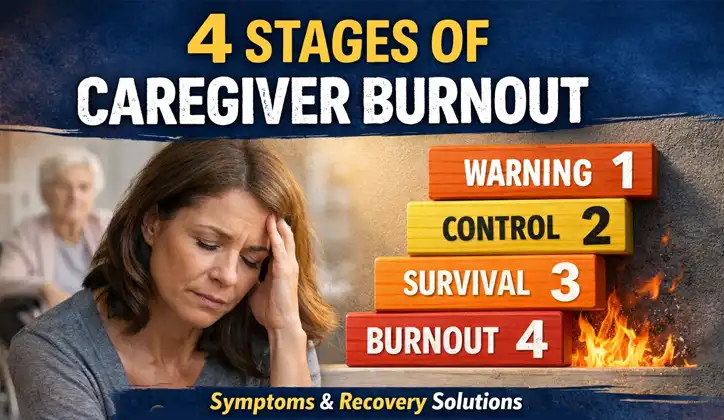
The following infographic will help you understand your current situation as a caregiver and make quick decisions. It is organized according to the latest health protocols for 2026.
| Stage | Key Characteristics | Action |
| 1. Warning Stage | Mild stress, irritability, and sleep problems. | Start taking breaks. |
| 2. Control Stage | Isolation from social life, constant anxiety. | Change your routine. |
| 3. Survival Stage | Intense fatigue, helplessness and anger. | Seek professional help. |
| 4. Burnout Stage | Complete breakdown, physical illness. | Stop providing services immediately. |
Detailed Analysis of Each Caregiver Burnout Stage
Burnout doesn’t happen overnight; it’s a slow process that consumes your life without you even realizing it. Below, we’ve broken down the psychological and physical aspects of each stage, so you can pinpoint where you’re at.
Stage 1: The Warning Stage
At this stage, you may think you have everything under control. But deep down, you are exhausted. A small negligence or small mistake towards your loved one can make you feel extremely guilty.
- Symptoms: Decreased attention at work, frequent headaches.
- Solution: Create a proper daily routine. Contact us for help. You can follow our Daily Caregiving Routine Guide.
Stage 2: Control Stage
Here, the caregiver thinks, No one else can do this job properly but me. This over-controlling mentality isolates you from family and friends.
- Symptoms: Avoidance of social events, irritable mood.
- Warning: It is at this stage that Compassion Fatigue begins.
Stage 3: Survival Stage
In this stage, you are just trying to survive. Your own eating, sleeping, or health is not important. Many people fall into this stage and become depressed.
- Symptoms: Not finding joy in anything, feeling like crying all the time.
Stage 4: The Burnout Crisis
This is a medical emergency stage. Here you are completely exhausted physically and mentally.
- Severe symptoms: Suicidal thoughts, addiction to narcotics.
- Status: You must seek professional respite care or therapy immediately.
Scientific Rules for Overcoming Burnout
Many people ask, What is the 42% rule for burnout? According to research, to reduce the stress hormones in our body, we should set aside at least 42% of our time a day (about 10 hours) for rest, sleep, and self-care. Also, follow the 3 R’s Rule:
- Recognize: Understand the signs of burnout.
- Reverse: Overcome loss through stress management and help.
- Resilience: Take care of your mental and physical health.
Spouse Caregiver Burnout: A Silent Killer
When you serve your spouse, the emotional stress doubles. You are losing your partner the grief and the pressure to serve them work together. This is called Ambiguous Loss. If you feel this way, join our support group now.
The Solution to Get Your Lost Life Back
Do you feel like you can’t go on? Thousands of our users have seen from their experience that it is impossible to break out of this cycle without the right guidelines.
Our USA Caregiver Experts have designed this solution with your current mental state in mind. This is not general advice, it is a complete recovery system.
- Personal checklist: Which will help you achieve small daily goals.
- Expert Support: Guidelines created directly by experts that will reduce your stress levels.
- Resilience Building: Special techniques to avoid burnout in the future.
Don’t delay, start your recovery today: Get Your Caregiver Burnout Recovery Toolkit
Conclusion
Caregiving is not about sacrificing your own life, but rather about serving others while you are healthy. Remember, it is impossible to serve your loved ones if you are not healthy yourself.
Do you feel like you are suffering from burnout? Let us know by contact us for a free consultation. We are here for you.
FAQs about the 4 Stages of Caregiver Burnout
What happens after caregiver burnout?
If left untreated, it can lead to chronic depression, anxiety disorders, and long-term physical illness. In many cases, it can cause permanent damage to the heart and immune system.
Is there any specific medicine for burnout?
In some cases, doctors prescribe medication to reduce anxiety or depression. However, medication alone is not a permanent solution; our Recovery ToolkitAppropriate therapy, lifestyle changes, and creating a support system are the long-term solutions.
How long does it take to recover from burnout?
It depends on what stage you’re at, but research has shown that a planned recovery routine (including proper sleep and nutrition) of 3 to 6 months is effective in restoring mental strength.
How do I know when it’s time to let go of my caregiving responsibilities?
When you are unable to maintain your own or your loved ones’ safety, your loved ones are scared because of your irritable mood, or your own body is breaking down, you should know that it is time to hand over the responsibility to the professionals.
What are the best stress relief exercises for caregivers?
According to 2026 research, 20 minutes of mindful breathing and light Vagus Nerve Stimulation exercises work fastest to reduce the stress hormone cortisol.