Caregiver Blog
Decision Fatigue in Caregiving: Signs, Causes, and Proven Reduction Process

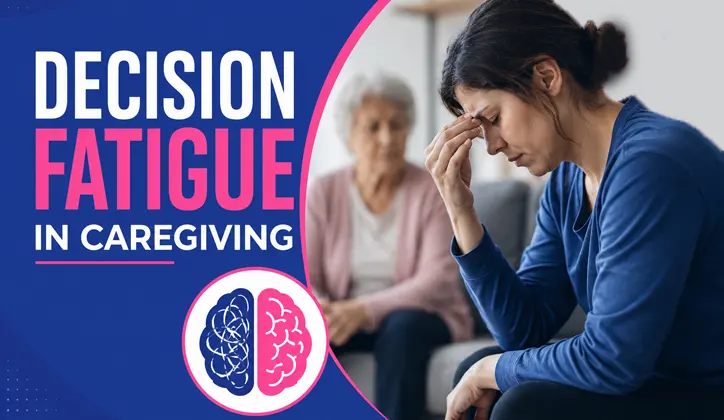
Decision fatigue in caregiving is the mental exhaustion family caregivers experience after making continuous emotional, medical, and daily care decisions for a loved one. Over time, constant stress, safety monitoring, medication management, and dementia-related responsibilities can overwhelm the brain and lead to caregiver burnout, brain fog, irritability, and poor decision-making. This guide explains the signs, causes, and proven ways caregivers can reduce mental overload, regain clarity, and prevent emotional exhaustion before it becomes dangerous.
What Is Decision Fatigue in Caregiving?
Decision fatigue in caregiving is a neurological and emotional exhaustion state that happens when caregivers make too many high-stakes decisions without enough mental recovery time.
Unlike ordinary stress, caregiver decision fatigue combines:
- emotional pressure
- medical responsibility
- safety monitoring
- constant uncertainty
A family caregiver may make hundreds of micro-decisions every day, including:
- medication timing
- symptom monitoring
- mobility assistance
- hydration reminders
- behavioral responses
- emergency judgment calls
Over time, the brain’s executive function system becomes overloaded. The caregiver starts avoiding decisions, delaying important tasks, or emotionally shutting down.
This condition is especially severe in dementia and Alzheimer’s caregiving because the caregiver must repeatedly respond to unpredictable behavior, memory loss, wandering risks, and emotional distress.
According to caregiving research from Alzheimer’s Association and Family Caregiver Alliance, prolonged caregiver stress significantly increases the risk of burnout, anxiety, sleep disruption, and cognitive exhaustion.
Why Caregivers Experience Decision Fatigue Faster Than Most People
The Prefrontal Cortex is the part of our brain that makes decisions. This part is much more active in a caregiver than in the average person.
- Cortisol overload: Constant worry and pressure to make decisions increases cortisol (stress hormone) in the body.
- Cognitive Depletion: Even simple things seem complicated when the brain runs out of energy.
- Hyper-alert mode: A caregiver is always in a state of “what if” panic, which causes their nervous system to crash.
12 Hidden Signs of Caregiver Decision Fatigue
Caregiving fatigue doesn’t always manifest itself physically; it often manifests itself through subtle changes in our behavior. Are you suffering from decision fatigue? Check out these 12 signs we often ignore.
- Avoiding Communication: Even answering the phone seems like a big decision to you, so you stop talking or answering.
- Forgetting Simple Tasks: All the routine tasks like where you put your keys or whether it’s time for your loved one’s medicine, start to disappear from your mind.
- Emotional Numbness: No news, good or bad, affects you anymore. You just keep going on ‘auto-pilot’ mode.
- Decision Minimization: You don’t have the mental strength to choose food by looking at the menu card. So you choose the same food every day.
- Choice Paralysis: You spend hours debating which of two brands of soap to buy when you go to the store.
- Irritability: You suddenly get angry or cry when you need to make a small decision.
- Impulsive Decisions: You buy unnecessary things on impulse because your ability to think decreases.
- Post-Decision Guilt: After any small decision you think about for a long time, “Did I make a mistake?”
- Fear of Change: Even the slightest change in routine can make you extremely anxious because new situations demand new decisions.
- Physical Symptoms:Constant headaches, burning eyes, or digestive problems that don’t go away even with rest.
- Chronic Procrastination: You repeatedly put off important medical appointments or paying bills.
- Feeling Detached: You feel like you are not controlling the situation, but rather the situation is dragging you down.
Comparison at a Glance: General Fatigue vs Decision Fatigue
| Features | Physical Fatigue | Decision Fatigue |
| Root cause | Physical exertion or lack of sleep | Constantly making complex and emotional decisions |
| Symptoms | Relaxing the body, getting sleepy | Hesitation, irritability, mental depression |
| Solution | A few hours of deep sleep | Routine automation and mental breaks |
| Impact | Rest helps you recover faster. | Difficulty making decisions even after rest |
The Dementia Decision Loop: Why Alzheimer’s Caregivers Burn Out Faster
Caring for a person with dementia or Alzheimer’s is different from other forms of caregiving. There is a special cycle at work here, which we call the dementia decision loop. This loop is why a caregiver can quickly become emotionally exhausted.
What exactly is the dementia decision loop?
This is a condition where the caregiver has to make decisions on the same issue 20 to 50 times a day, and each decision is based on uncertainty and fear.
The four main components of this loop are:
- Repeated Decisions: The patient asks the same question over and over again. Should you answer him again? Or should you remain silent? Having to make this small decision hundreds of times exhausts the brain’s energy.
- Unpredictable Behavior: It is difficult to tell when a dementia patient will become aggressive or leave the house. This constant vigilance does not allow the caregiver to calm down.
- Safety Monitoring: Should I let him go to the bathroom alone? Will he fall? Should I give him the key? Each of these questions is a major safety decision.
- The Guilt Cycle: If for some reason you get a little harsh or lose your temper, you will suffer from guilt for the next few hours. This emotional struggle further weakens your decision-making ability.
Why is this dangerous?
When a caregiver gets stuck in this loop,Prefrontal Cortex(the brain’s decision-making center) functions less. This results in ‘cognitive tunneling’, where the caregiver sees nothing but the immediate danger. This long-term stress loop eventually leads to ‘caregiver shutdown’ or complete emotional exhaustion.
If you are a dementia caregiver, the only way to break this loop is through automation and acceptance. Accepting that you don’t have to answer every question and that you don’t have control over every situation is the first step to breaking out of the loop.
The True Cost of Decision Fatigue: Its Terrifying Impact on Caregivers and Patients
Decision fatigue in caregiving is not just a mental state; it is a silent killer that puts the lives of both patients and providers at risk. When the brain runs out of decision-making power, it starts looking for ‘shortcuts’, and that’s where the danger begins.
Why is decision fatigue dangerous?
The main risks caused by decision fatigue are discussed below:
- Medication Mistakes: Studies have shown that a mentally exhausted caregiver has a harder time remembering the correct dosage or timing of medication. Giving the wrong medication or missing a dose can be life-threatening for an elderly or sick person.
- Delayed Medical Action: When a new symptom appears (such as a mild fever or shortness of breath), caregivers suffering from decision fatigue cannot decide whether it is urgent or normal. This dilemma often leads to the patient being admitted to the ICU.
- Caregiver Illness: The constant pressure of making decisions can lead to high blood pressure, insomnia, and an increased risk of heart disease. When the body is in ‘fight or flight’ mode all the time, the immune system quickly declines.
- Relationship deterioration and resentment: When a caregiver is emotionally broken, they begin to feel resentful toward their loved one. This negative feeling creates guilt and reduces the quality of care.
- Emotional Shutdown: This is a stage where the caregiver’s feelings become numb. He or she acts like a robot, but cannot feel any compassion or love for the patient, which is very harmful for dementia or Alzheimer’s patients.
How to Reduce Decision Fatigue in Caregiving – The 5D Decision Reset Framework
Simply saying take a break isn’t enough to reduce the stress of caregiving. You need an effective system. I’m introducing the 5D Caregiver Decision Reset Framework, which will reduce your daily stress by half.
What is the 5D Framework and how does it work?
The main goal of this framework is to force your brain to make fewer decisions, so that your brain power is conserved for times of need.
- Delete (Delete – Remove unnecessary decisions): Waking up every morning and wondering, “What should I cook today?” or “What should I wear?” wastes your energy.
- To do: Cross off the list of trivial decisions that don’t impact your patient’s health. Stop unnecessary social media or news updates.
- Delegate (Delegate – Share responsibilities): You are not a superhero. Trying to do everything alone is a major cause of decision fatigue.
- To do: Delegate decisions like shopping, paying bills, or cleaning the house to another family member or a service provider. Remember, “Asking for help is not a sign of weakness, it’s a sign of intelligence.”
- Default (Default – Routine Automation): Instead of making decisions, create routines. When a task becomes a ‘default’, the brain doesn’t have to think anymore.
- To do: Create a weekly meal plan. Use an alarm for taking your medication. Set a fixed task for every Tuesday or Saturday. A default routine means zero decisions.
- Delay (Delay – Postpone unimportant decisions): There is no need to answer all the decisions right away.
- To do: If a relative or friend asks for your opinion on something that isn’t urgent, just defer it. Tell yourself, “I’ll think about this tomorrow afternoon.” This makes it easier to focus on the task at hand.
- Document (Document – Write down the care system): Stop relying on memory. Keeping everything in mind means overloading the brain.
- To do: Create a ‘caregiver command centre’ or diary. Write down the patient’s daily updates, medication charts, and emergency contact numbers there. It will act as an ‘external hard drive’ for your brain.
At a Glance: 5D Framework Table
| Steps | Purpose | Real example |
| Delete | Freeing up brain space | Stop giving in to social pressure. |
| Delegate | Reducing workload | Shopping online or automating bill payments. |
| Default | Automate | Plan your daily meal menu. |
| Delay | Stay focused | Decide on home renovations or new investments later. |
| Document | De-stressing memory | Hang the medication schedule on the wall. |
Best Tools and Services That Reduce Caregiver Stress
The goal of caregiving technology is not convenience alone. Its real purpose is reducing cognitive overload by removing repetitive daily decisions from the caregiver’s brain.
Caregiver Decision Reduction Tools
| Tool Type | What It Reduces | Best For |
| Smart Pill Dispensers | Medication timing decisions | Dementia caregivers |
| Medication Reminder Apps | Dosage tracking stress | Adult-child caregivers |
| Shared Family Calendars | Coordination confusion | Large families |
| Meal Delivery Services | Daily food planning fatigue | Burned-out caregivers |
| Smart Home Sensors | Safety monitoring anxiety | Alzheimer’s caregiving |
| Respite Care Services | Continuous hypervigilance | Full-time caregivers |
Why These Tools Matter
Many caregivers experience decision stacking, where dozens of small decisions accumulate throughout the day until the brain becomes overloaded.
For example:
- deciding meals
- checking medications
- tracking symptoms
- answering repeated questions
- scheduling appointments
Each task seems small alone, but together they exhaust executive function.
Automation tools reduce this hidden mental workload and allow caregivers to preserve energy for emotional connection and medical emergencies.
Do you want to get rid of caregiver burnout? Learn more about our Caregiver Consulting Service.
When Decision Fatigue Becomes Dangerous
When you feel like you have no control over yourself, that you might harm the patient, or that you are having suicidal thoughts, seek professional help without delay.
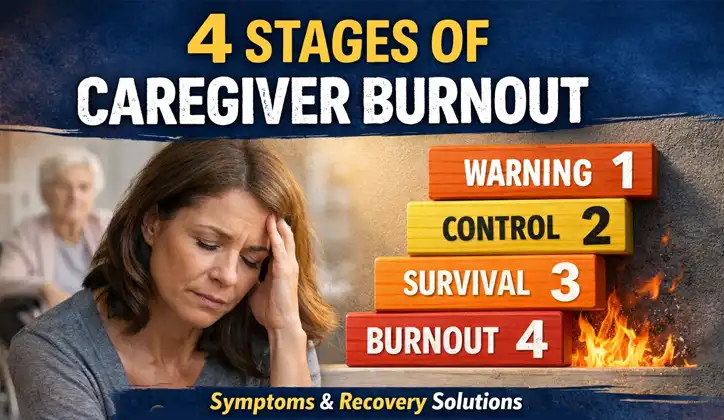
Especially when you experience caregiver shutdown or emotional dissociation (no longer feeling the patient’s pain), you should understand that you are in the final stages of burnout. It is not possible to fight this situation alone. You need a structured solution.
To overcome this mental paralysis and fatigue, we have created a scientific Caregiver Burnout Recovery Plan, which will directly help you regain mental strength and build a balanced caregiving life.
How Family Caregivers Can Recover Mental Clarity
It is possible to regain the mental clarity lost under the stress of caregiving. This requires a planned recovery system:
- Nervous System Recovery: When your brain is in ‘fight or flight’ mode all the time, it’s impossible to think rationally. Practice box breathing for 5 minutes 3 times a day. This will calm your vagus nerve.
- Rest Cycles: Not just sleep, you need ‘sensory rest’. Spend some quiet time during the day by turning off your phone’s notifications.
- Decision Batching: Make all the small decisions at once. For example, sit down on Saturday afternoon and fix the menu and medication chart for the next seven days. So that you don’t have to think about them twice for the remaining six days.
- Care Recovery Planning: Have a backup caregiver ready for you. Take a full week off at least once a year.
FAQ – Caregiver Decision Fatigue
What exactly is decision fatigue in caregiving?
It is a mental state where the caregiver’s judgment and mental energy are depleted by having to make countless decisions about the patient’s health and daily life throughout the day. As a result, even simple decisions seem overwhelming and the mood becomes irritable.
Why are dementia caregivers more likely to experience decision fatigue?
Dementia patients’ behavior is unpredictable and they ask the same questions over and over again. A caregiver has to make new decisions every minute in response to the patient’s safety and behavior, which can quickly overload the brain.
Does decision fatigue impact patient safety?
Of course. A tired brain can make mistakes like missing a dose of medicine or ignoring serious symptoms while looking for shortcuts. This is one of the main reasons why a patient’s life is at risk.
How can caregivers make everyday decisions easier?
It is possible to reduce decision making by using routine automation and the 5D framework. Deleting unnecessary thoughts, delegating responsibilities, and writing down the tasks for the week can greatly reduce stress.
What are the best organizing tools for caregivers?
Smart pill dispensers, medication reminder apps (like Medisafe), and shared family calendars are the most effective. They automate the system, reducing the burden on caregivers’ memory.
When should a caregiver seek help?
When you feel angry or guilty about not being able to make decisions, make mistakes in small tasks, or feel mentally numb, you should seek professional help or family support immediately.
Are caregiver burnout and decision fatigue the same?
No, but they are related. Decision fatigue is specifically the exhaustion of the ability to make decisions, which, if prolonged, leads to full-blown ‘burnout’ or complete physical and mental breakdown.
Related Posts