
Caregiver Blog
Caregiver Burnout Quiz: Signs, Stages, Symptoms & Recovery Guide

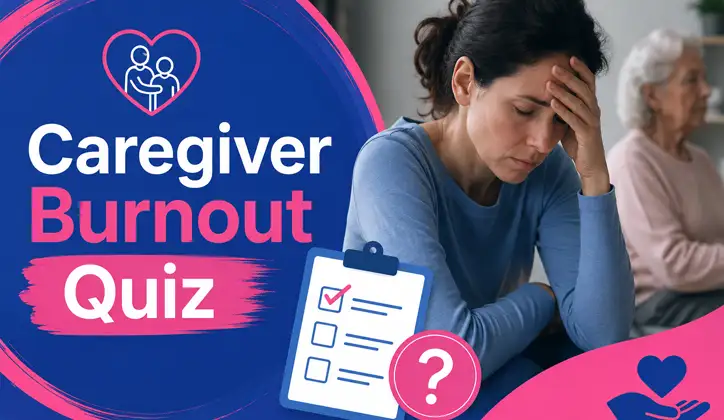
Caring for a loved one with dementia or another long-term illness is one of the most honorable and selfless jobs in the world. But the reality is that caregivers can become physically and emotionally drained while caring for someone 24 hours a day. Have you been feeling extremely tired lately? Are you getting angry or resentful at your loved one for no apparent reason?
If the answer is yes, you are not alone. These feelings are not uncommon. They are not a weakness on your part, but could be a sign of caregiver burnout. Our special guide and caregiver burnout quiz will help you understand your current emotional state and find the right solution.
What Is Caregiver Burnout?
Caregiver Burnout is an extremely tiring condition caused by prolonged physical, mental, and emotional overwork on the part of a caregiver. It is not ordinary fatigue or stress. When a caregiver completely forgets to take care of themselves and continues to serve others, a kind of deep depression, reluctance to work, and severe mental exhaustion develop within them.
Normal daily stress or strain can be relieved with a few days of rest. But in the case of burnout, fatigue does not go away even after getting enough sleep. It gradually lowers your immunity and makes you irritable.
Caregiver Burnout Quiz: Are You at Risk?
To understand whether you are experiencing normal stress or have already suffered from severe burnout, answer the questions below. Next to each question, calculate a score (0 to 3) according to the intensity of your feelings.
- 0 = Never
- 1 = Sometimes
- 2 = Often
- 3 = Always
self-assessment quiz

How to calculate your score:
- Score 0 – 5 (Mild Burnout/Normal Stress): Your mental state is still under control. But start taking small breaks for yourself.
- Score 6 – 12 (Moderate Burnout/Medium Risk): You need to immediately reduce your workload and arrange for respite care options or temporary support.
- Score 13 – 18 (Severe Burnout): You are in an extremely vulnerable situation. You need professional help and a proper recovery plan right now.
Next steps: If your score is moderate or severe, don’t neglect yourself just yet. You can get direct guidance from an expert through our specialized Caregiver Burnout Recovery Plan service.
The 4 Stages of Caregiver Burnout Explained
Caregiver burnout doesn’t happen overnight. According to behavioral psychologists, it manifests itself in 4 stages. Understanding these stages can help you protect yourself in the early stages. For more information, see our 4 stages of caregiver burnout guide.
[Stage 1: Warning] ──> [Stage 2: Control] ──> [Stage 3: Survival] ──> [Stage 4: Collapse]
- Warning Stage: In this stage, the caregiver tries to do everything alone with great enthusiasm. However, sometimes mild physical fatigue and sleep deprivation occur.
- Control Stage (trying to maintain control): At this stage, fatigue becomes a regular occurrence. The caregiver begins to give up on their social life and hobbies, thinking, “I can handle it all on my own.”
- Survival Stage (fight for survival): Here, a kind of anger and intense resentment towards work develops. The caregiver considers the daily responsibilities a huge burden and falls into deep depression.
- Burnout Collapse Stage (Final Collapse): This is the most devastating stage. Here, physical and mental abilities are completely lost. It is then no longer possible for the caregiver to care for the patient in any way.
7 Warning Signs of Severe Caregiver Burnout
Caregivers often mistake serious symptoms of burnout for simple fatigue. Watch out for these warning signs of caregiver burnout to help you understand if you’re harming your health while caring for a loved one:
- Emotional Numbness: The patient no longer has any feelings about anything, good or bad.
- Brain fog and indecision: Inability to make the right decisions even in very simple matters and a tendency to be extremely forgetful.
- Intense anger towards a loved one: Yelling or getting angry at a dementia or Alzheimer’s patient for their unruly behavior.
- Social Isolation: Withdrawing from everyone and expressing reluctance to leave the house.
- Panic and Anxiety Attacks: Palpitations, heaviness in the chest, and intense fear about the future.
- Chronic insomnia: Unable to sleep at night despite being extremely tired.
- Caregiver Guilt: Feeling “Maybe I couldn’t be a good caregiver.”
Caregiver Burnout vs Compassion Fatigue: What’s the Difference?
Many people think of burnout and compassion fatigue as the same thing, but from a medical perspective, there are subtle and important differences between the two.
| Features | Caregiver Burnout | Compassion Fatigue |
| Root cause | Excessive workload and environmental complexity. | The mental stress caused by constantly witnessing the patient’s suffering and trauma. |
| Attack speed | It builds up slowly over time. | It can strike very quickly or suddenly. |
| Main symptoms | Physical fatigue, depression and decreased performance. | Severe lack of empathy, mental numbness and apathy. |
| Solution | Sharing work responsibilities, taking rest and breaks. | Therapy, counseling, and emotional decompression. |
Why Spouse & Family Caregivers Experience Higher Burnout Rates
Various studies by the American Medical Association have shown that family caregivers (such as spouses or children) have a much higher rate of burnout than professional nurses. There are some psychological reasons behind this:
1. Role-Identity Loss
When a wife becomes a caregiver for her husband with dementia, the marital love relationship between them becomes one of ‘patient and caretaker’. This emotional shift is very difficult to accept.
2. The Pressure of Sandwich Generation Caregivers
Many middle-aged caregivers have to take care of both their young children and their aging parents at the same time. Juggling both responsibilities leaves them with not a single minute to themselves.
3. Different complications of dementia caregiving
The mood swings, hallucinations, and habit of staying up in the middle of the night in Alzheimer’s or dementia patients cause extreme emotional turmoil in the family, which multiplies the rate of burnout.
Recovery & Prevention Framework: The “CARE” Reset Model
Recovering from burnout is not impossible. But it’s not enough to just “have a cup of tea” or “listen to some music.” It requires a realistic and structured lifestyle change. You can get back to normal by following the “CARE” Reset Framework created by our experts:
- C – Create Respite Windows: Take a complete break from your responsibilities, at least for a few hours a week. Seek help from a daycare center or another relative during this time.
- A – Ask for Shared Responsibility: Stop insisting on doing everything alone. Assign specific responsibilities to other family members.
- R – Rebuild Sleep & Nutrition: You cannot take care of anyone else if you are not healthy. Eat nutritious food and get at least 6-7 hours of uninterrupted sleep every day.
- E – Emotional Decompression: Share your feelings and frustrations with a professional caregiver, licensed therapist, or support group.
Special Resources: For a complete medical and practical guide to step-by-step recovery from burnout, read our caregiver burnout treatment guide.
When Caregiver Burnout Becomes Dangerous
Many people ignore burnout, but when it turns into long-term or chronic stress, it can become serious. If you experience the following symptoms, you should know that the situation is no longer under control:
- If you are experiencing frequent panic attacks or symptoms of clinical depression.
- If thoughts of harming yourself or committing suicide come to mind.
- If you have a chronic illness such as chronic high blood pressure, heart disease, or diabetes.
- If the mood gets out of control and there is a risk of physical or mental abuse towards the patient.
In such situations, do not hesitate to seek immediate help from a mental health professional or geriatric care specialist.
Free Caregiver Burnout Resources
The Ultimate Caregiving Expert is here to make your caregiving journey easier. Get our premium guide to overcoming burnout and tracking daily stress.
Click here to download our special digital booklet today: Caregiver Burnout Recovery Product. This resource will help you regain peace of mind and create a healthy routine.
FAQs about Caregiver Burnout Quiz
What are the 4 stages of caregiver burnout?
The four stages of caregiver burnout are: 1. Warning Stage, 2. Control Stage, 3. Survival Stage, and 4. Burnout Collapse.
What are three symptoms of caregiver burnout?
The three main symptoms are: 1. Extreme physical and mental fatigue even after adequate rest, 2. Irritability and sudden outbursts of anger or rage, and 3. Complete isolation from social contact.
How long can caregiver burnout last?
How long burnout lasts depends on how quickly you take action. It can last from a few months to a few years, unless the caregiver’s work environment is changed and proper respite care is provided.
When should a caregiver give up?
A caregiver should never stop providing care “without a plan.” However, when one’s own physical and mental health is severely compromised and the patient’s safety is compromised, it is wise to transfer the patient to professional assisted living or home care services.
What is severe caregiver burnout?
Severe caregiver burnout is a devastating mental condition in which a person becomes completely emotionally numb, suffers from severe depression, and loses even the minimal physical ability to care for themselves and their patients.
What is the 30-30 rule for burnout?
The 30-30 rule of burnout is to take a complete break of at least 30 minutes between consecutive days of work or to create a large refreshment or respite window for yourself every 30 days.
Tell us your thoughts: Are you currently a caregiver? How did you score on today’s caregiver burnout quiz? Share with us in the comments below. The Ultimate Caregiving Expert is on your side.