

Caregiver Blog
Long Distance Caregiving: How to Coordinate Care From Another State

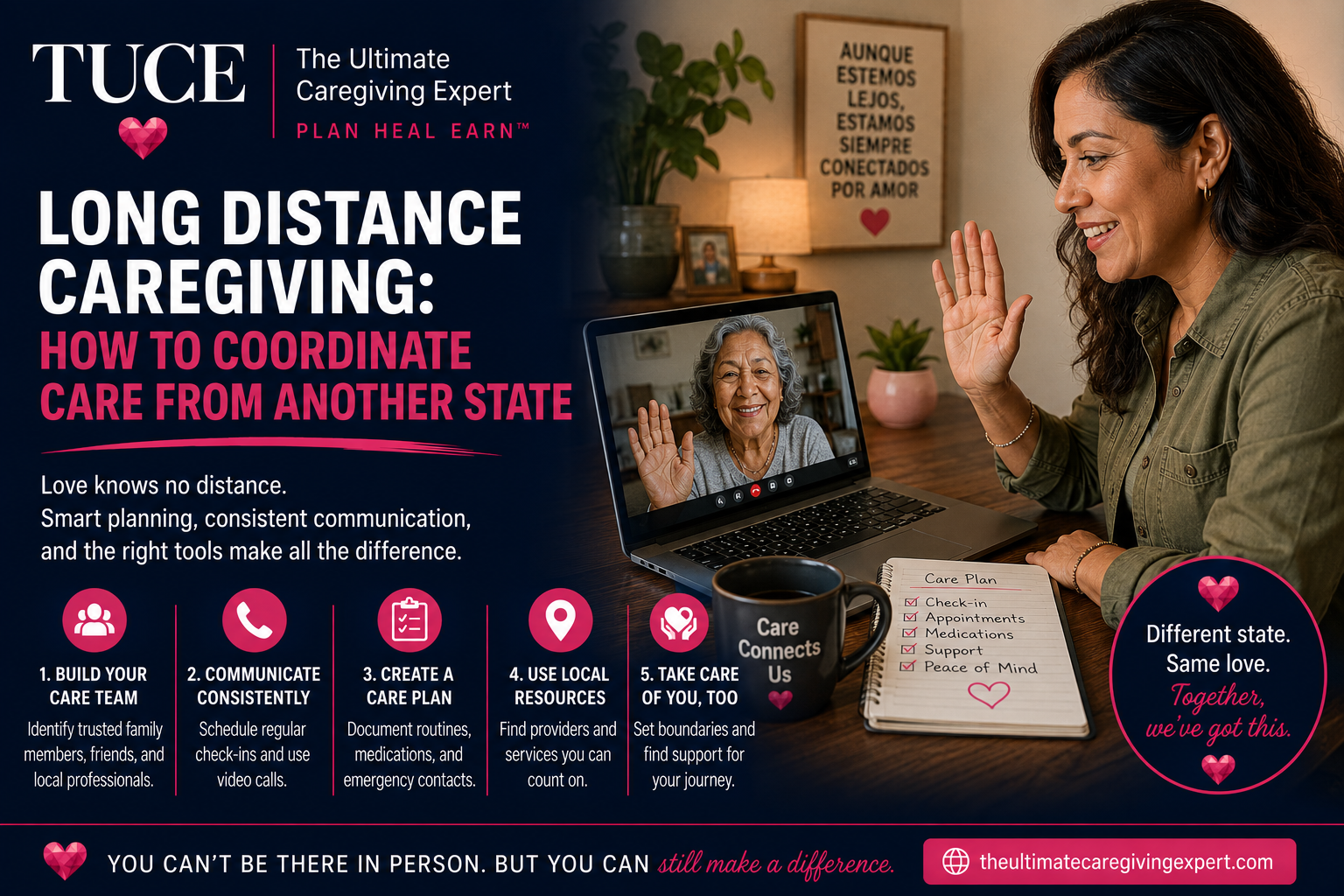
Long Distance Caregiving: How to Coordinate Care From Another State
A practical system for staying genuinely involved in a loved one’s care without being physically present
Long distance caregiving is not simply local caregiving with an extra flight involved. The problems are different in kind, not just degree. You cannot notice the small daily changes in person, a slight decline in appetite, a stumble that almost happened, a bill that went unopened. The system has to catch what your presence normally would, and building that system is its own discipline entirely.
In this post: why long distance caregiving is its own category rather than a smaller version of local caregiving, how to build a local support team when you cannot be there yourself, the systems that keep you informed without being present, how to know when a trip is actually necessary, and how to split responsibilities fairly with anyone nearby.
Why Long Distance Caregiving Is Its Own Category
Long distance caregiving is not simply local caregiving with an extra flight involved. The problems are different in kind, not just degree. You cannot notice the small daily changes in person, a slight decline in appetite, a stumble that almost happened, a bill that went unopened. The system has to catch what your presence normally would.
This distinction matters because many long distance caregivers spend their first months trying to replicate local caregiving from far away, checking in constantly, feeling guilty for every missed detail, without realizing the actual solution is a different kind of system entirely, not simply more effort applied to the wrong approach.
Building Your Local Support Team
Neighbors who agree to a regular, informal check in are often more valuable than any technology. A quick daily glance from someone who lives two doors down can catch things no camera or app ever will, a light left on all night, a car that has not moved, a paper still on the porch.
A local paid caregiver, even a few hours a week, can serve as your eyes and ears as much as hands on help. This person becomes a second set of senses in the home, someone who notices the small changes you would notice yourself if you were there.
A geriatric care manager, a paid professional who coordinates care locally, can be worth the cost specifically because you are not there to do it yourself. These professionals specialize in exactly the gap long distance caregiving creates, and many families find the cost pays for itself in avoided crises and better coordinated care.
Systems That Keep You Informed Without Being There
A shared digital calendar for appointments, medications, and providers keeps everyone, including any local siblings or helpers, working from the same information. This single source of truth prevents the confusion that comes from each person keeping their own separate mental picture of what is happening.
Regular scheduled calls, not just reactive ones after a problem, help you notice gradual changes before they become emergencies. A weekly call at the same time, even a short one, tends to reveal slow changes that would otherwise go unnoticed until they became urgent.
Medication management systems with reminders, some with remote monitoring features, close part of the daily gap distance creates. Even a simple pill organizer paired with a daily text confirmation can catch missed doses before they become a real medical problem.
For general guidance on finding local aging services wherever your loved one lives, the Eldercare Locator, a free public service of the U.S. Administration on Aging, connects you with local resources specific to their area.
Technology worth considering, without overcomplicating things, includes simple video calling for face to face check ins, a shared password protected document for important information like medication lists and doctor contacts, and in some cases a smart home sensor system that alerts you to unusual patterns, like a door not opening at the usual morning time. None of these replace a human local support system, but they can meaningfully add to it.
A Real Example of How This Works in Practice
Consider a daughter living several states away from her father, who was managing well on his own until a series of small changes started adding up. A neighbor she had arranged a weekly check in with mentioned he seemed unsteady getting the mail. A scheduled weekly call revealed he had been skipping meals more often than usual. Neither detail alone would have prompted a trip, but together, caught through the system rather than left to chance, they gave her enough information to arrange an in person visit before a fall or a bigger crisis happened.
Without that system in place, these same small changes would likely have gone unnoticed until something more serious forced the issue, at a point where options are usually more limited and more stressful to arrange.
Knowing When a Trip Is Actually Necessary
Deciding this in the moment, under stress, tends to lead to either overreacting to something minor or underreacting to something serious. Setting rough criteria in advance, specific symptoms, specific events, a certain number of missed check ins, gives you a calmer way to decide when it is genuinely time to go.
Write this list down while things are calm, not during a stressful phone call. Two missed medication doses in a week. A fall, even a minor one. A neighbor or local helper expressing genuine concern. Having these criteria decided in advance removes the guesswork exactly when guesswork is hardest to do well.
It also helps to decide in advance roughly how quickly you could actually get there if needed, including researching flight options or driving routes ahead of time, so that decision does not add extra delay on top of an already urgent situation.
Splitting Responsibilities With Anyone Nearby
If siblings or other family are closer, write down who owns what, rather than assuming it will sort itself out naturally. Vague division of labor tends to quietly become one person’s job by default, usually whoever is geographically closest, regardless of what is fair.
A short, honest conversation early on, ideally before a crisis forces the issue, tends to prevent resentment from building later. Decide together who handles which appointments, who manages finances, who is the point of contact for doctors, and revisit that division periodically as circumstances change.
If you are also thinking through how to organize a more complex care situation overall, our post on caregiver overwhelm and the complete plan guide covers related ground worth reading alongside this one.
Common Mistakes Long Distance Caregivers Make
One of the most common mistakes is trying to manage everything through frequent phone calls alone, without ever building the local system described above. Calls are valuable, but they cannot replace someone physically present to notice what words on a phone call miss entirely.
Another common mistake is waiting too long to bring in paid local help out of guilt, believing that hiring someone means failing as a caregiver. In reality, a local paid caregiver or geriatric care manager is often what makes long distance caregiving sustainable at all, not a sign of giving up on your role in it.
A third mistake is assuming the current system will keep working indefinitely without ever revisiting it. A check in schedule or support team that worked well a year ago may no longer match a care recipient’s current needs, and periodically reassessing the whole system prevents it from quietly becoming outdated.
The Cost of Not Having a System
Families without a long distance caregiving system in place often end up making far more expensive decisions later, an emergency flight booked last minute, an unplanned extended stay away from work, or a rushed decision about care arrangements made without enough information. The upfront time spent building a check in system and local support team is almost always less costly, in money and in stress, than managing repeated crises without one.
Staying Emotionally Connected From a Distance
Long distance caregiving carries its own emotional weight, often heavier than local caregiving in some ways, precisely because you are managing real responsibility without the daily physical presence that usually comes with it. Scheduling calls that are not just logistical, simply catching up, hearing their voice, staying connected as family rather than only as a caregiver, matters for both of you.
This emotional connection is not separate from the practical system, it strengthens it. A parent who feels genuinely connected to you, not just managed from afar, tends to be more honest about how they are actually doing when you ask.
Where to Go From Here
If building this kind of system feels overwhelming to figure out alone, the Caregiver Plan walks you through organizing exactly this, local support, communication systems, and clear roles, into one practical structure you can actually follow.
Free guide, I Am More Than a Caregiver: https://caregivingexpert.gumroad.com/l/Morethanacaregiver
The Caregiver Plan, $27: https://caregivingexpert.gumroad.com/l/Plan
The Caregiver Stability Snapshot, $197: https://theultimatecaregivingexpert.com/caregiver-stability-snapshot/
The Caregiver Stability Plan, $500: https://theultimatecaregivingexpert.com/caregiver-stability-plan/
Long distance caregiving will never feel exactly like being there in person, and it does not need to in order to work. A good system does not replace your presence, it extends it, catching what distance would otherwise hide until it becomes a genuine emergency.