How to Care For Someone When They Are Bedridden Or Unconscious


Caring for a loved one who is bedbound or unconscious is one of the most selfless yet demanding roles a family member can take on. It requires more than just physical strength; it demands a strategic approach to hygiene, nutrition, and mental well-being. Whether you are caring for an elderly parent or a relative recovering from surgery, the goal is the same: providing comfort and learning how to care for bedridden patient effectively, preserving dignity, and preventing life-threatening secondary complications like sepsis or pneumonia.
In this comprehensive guide, we will walk through a professional-grade Nursing Care Plan tailored for home use, including daily routines, essential equipment, and critical safety protocols that every family caregiver must know.
What is a Bedridden Patient?
A bedridden (or bedbound) patient is an individual who is unable to leave their bed due to severe physical limitations, chronic illness, or advanced cognitive impairment. This state is not a diagnosis in itself but a condition that can be temporary, such as during post-surgical recovery, or permanent, as seen in end-of-life care or advanced paralysis.
When a person becomes bedbound, they lose the ability to perform basic Activities of Daily Living (ADLs) like bathing, dressing, or shifting their weight. This total dependency makes a structured Caregiving Plan of Care vital to ensure no aspect of their health is neglected during the long hours of immobility.
Common Health Problems in Bedridden Patients
Prolonged immobility is unnatural for the human body and quickly begins to affect every organ system, from the skin to the lungs. As a caregiver, your primary role shifts from helper to monitor, where you must act as the first line of defense against these four major silent threats that often develop without early pain signals:
- Pressure Ulcers (Bedsores): These painful wounds occur when constant pressure on bony areas (heels, hips, tailbone) restricts blood flow, causing skin and tissue death in as little as two hours.
- Muscle Atrophy & Contractures: Lack of use causes muscles to shrink and tendons to shorten, leading to permanently frozen joints that make cleaning and dressing the patient extremely difficult.
- Hypostatic Pneumonia: When a patient remains flat, fluid settles in the lower lobes of the lungs, creating a breeding ground for bacteria because they cannot cough effectively or breathe deeply.
- Psychological Distress: Sensory deprivation and isolation often trigger Caregiver-Patient conflict, severe depression, and a dangerous phenomenon known as failure to thrive, where the patient loses the will to recover.
Step-by-Step Bedridden Patient Care at Home
To provide professional-level care at home, you must transition from casual help to a nursing mindset. Quality care is built on consistency and precision. By following these three core pillars, you can significantly reduce the risk of hospital readmission and keep your loved one stable:
1. Skin Care & Bedsore Prevention
Maintaining skin integrity is the most critical task for any bedbound patient, as a single bedsore can lead to a systemic infection.
- The 2-Hour Rule: Reposition the patient every 120 minutes without exception. Use a turning schedule or a timer to stay consistent.
- Micro-environment Management: Use specialized pillows or foam wedges to float the heels off the mattress and keep knees from rubbing together.
- Moisture Control: Skin must stay dry. Use high-quality moisture-barrier creams (zinc-based) after every diaper change to prevent incontinence-associated dermatitis.
- Shear Prevention: Never drag a patient up in bed; this tears the fragile skin layers. Always use a lift sheet or two people to move them.
2. Hygiene Management (The Bed Bath)
A bed bath is not just about smell; it is a vital clinical tool to stimulate peripheral circulation and inspect the body for new injuries or rashes.
- Systematic Cleaning: Wash from cleanest to dirtiest, starting with the eyes using only water, then move to the face, arms, trunk, legs, and finish with the perineal area.
- Temperature & Safety: Always test water temperature with your elbow. Use no-rinse cleansing foams if traditional soap is too drying for their skin.
- Oral Hygiene Criticality: Perform mouth care at least twice daily. In non-eating patients, biofilm builds up quickly, which can be inhaled into the lungs, causing aspiration pneumonia.
3. Nutrition and Hydration
Proper nutrition is the fuel the body needs to repair skin and maintain muscle mass, but feeding a bedbound person requires extreme caution to avoid choking.
- Aspiration Awareness: If they are on a Feeding Tube or eating orally, the head of the bed must be at a 30-45 degree angle during and for 60 minutes after meals.
- Nutrient Density: Focus on high-protein, high-calorie small meals. Protein is the building block for skin; without it, bedsores will never heal.
- Hydration Monitoring: Look for tented skin or dark, concentrated urine. Offer sips of water or hydrating gels every hour they are awake.
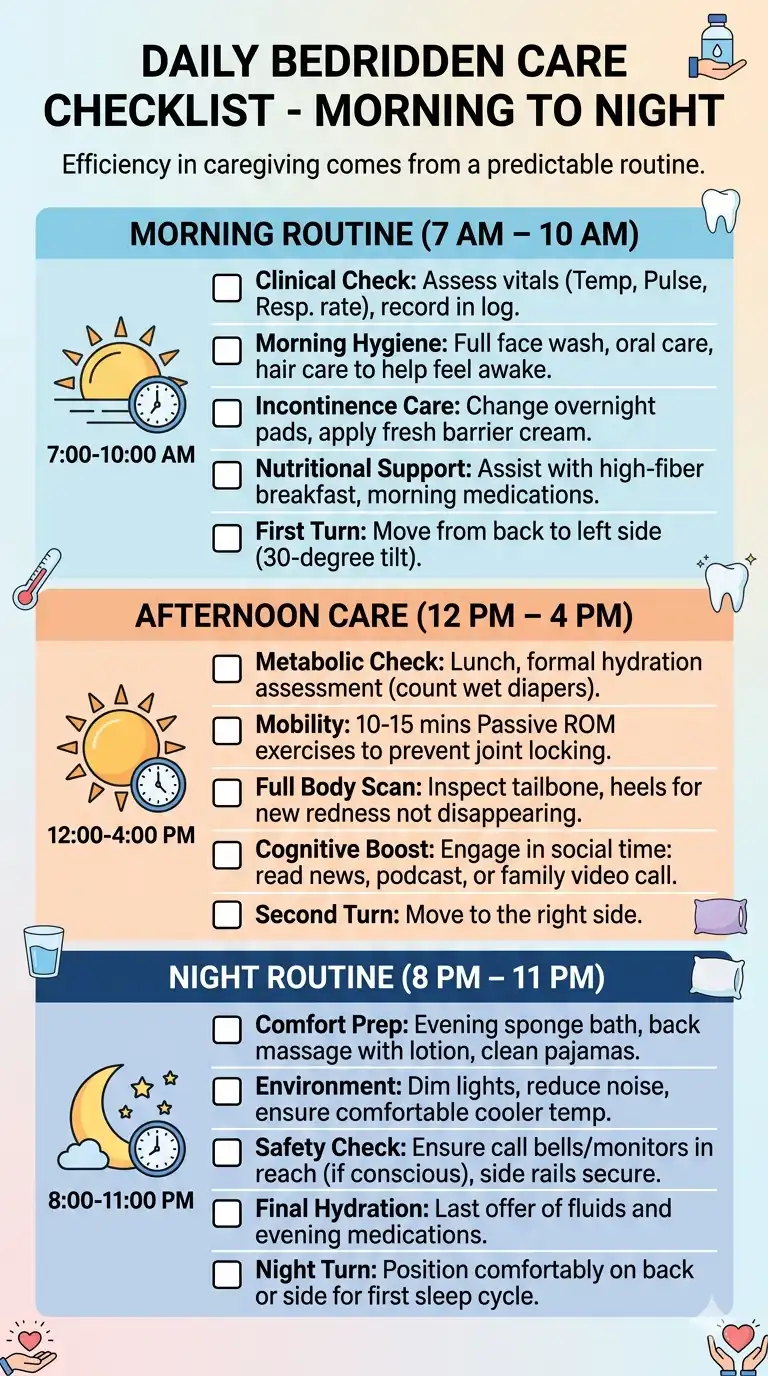
Daily Bedridden Patient Care Checklist – Morning to Night
Efficiency in caregiving comes from a predictable routine. This checklist ensures that both the patient’s physical needs and your own mental health are managed without chaos.
Care for Unconscious Patients (Special Guide)
Caring for a non-responsive patient is technically demanding because they cannot provide feedback on pain, thirst, or pins and needles. You are their voice and their nervous system.
- Airway Management: This is your absolute priority. Always maintain a semi-Fowler or lateral position. An unconscious patient cannot clear their own throat; you must prevent silent aspiration by keeping their head elevated.
- Sensory & Emotional Presence: Hearing is scientifically proven to be the last sense to disappear. Talk to them as if they are awake. Explain every touch: I am going to wash your face now, Dad. This reduces potential subconscious stress.
- Preventive Eye Care: If the patient’s eyes remain partially open, they will dry out, leading to permanent blindness (corneal scarring). Use prescribed lubricating drops or moisture chambers as directed by a doctor.
Warning Signs You Should Not Ignore
In home care, minutes matter. You must be able to distinguish between normal recovery and an acute medical emergency. Call for help if you see:
- Respiratory Distress: Rapid breathing (over 24 breaths per minute), gasping, or a blue tint around the lips and fingernails.
- Advancing Tissue Death: Any skin area that is black (eschar), smelling foul, or oozing green/yellow pus.
- Renal Warning: No urine in the catheter bag or diaper for over 8 hours, suggesting severe dehydration or kidney failure.
- Sepsis Signs: A sudden spike in fever accompanied by confusion or extreme shivering.
- Neurological Shift: A conscious patient who becomes suddenly impossible to wake or demonstrates a new facial droop.
Best Equipment for Bedridden Patients
The right medical equipment is an investment in safety. It prevents caregiver back injuries and significantly lowers the patient’s risk of hospitalization.
- Fully Electric Hospital Bed: Vital for frequent head elevation and adjusting the height for safer caregiving.
- Alternating Pressure Air Mattress: The gold standard for bedsore prevention; it constantly shifts pressure points automatically.
- Transfer Slide Sheets: These low-friction fabrics allow you to move a 200lb patient with the force of only a few pounds, protecting your spine.
- Bedside Commode & Urinals: Essential for maintaining what’s left of a patient’s mobility and independence.
- Medical-Grade Suction Machine: A lifesaver for unconscious patients who struggle to clear phlegm or saliva from their throat.
Expert Caregiver Tip: Don’t Forget Yourself
Caring for a bedridden parent is a marathon of the soul. If you find yourself feeling resentful, exhausted, or constantly angry, you are likely suffering from caregiver burnout. Resilience is built on rest. As a Caregiver Strategist, I cannot stress this enough: Self-care is a part of the patient’s care plan. Use “respite care” services to step away for a few hours. A rested caregiver provides safer, more compassionate care.
FAQs about Care for Bedridden Patients
Can we prevent bedsores 100% of the time?
While highly preventable with turning and air mattresses, some unavoidable sores occur due to total organ failure. However, 95% are preventable with the 2-hour rule.
How do I handle the smell of an unconscious patient’s room?
Odor is usually a sign of infection (UTI or skin) or poor ventilation. Ensure daily hygiene, use charcoal odor absorbers, and check for hidden skin folds.
What if the patient refuses to be turned?
Explain the risks of bedsores simply. If they still refuse, try smaller, more frequent shifts (15 degrees) rather than a full 90-degree turn to minimize discomfort.
Author Note: Tena Scallan brings over 30 years of clinical and home-care expertise to this guide. Her mission is to turn family members into confident, capable caregivers through professional-grade education.
Being bedridden indeed presents numerous challenges, both physically and mentally. It’s crucial to address these issues with care and compassion. I appreciate the emphasis on the importance of in-home care, as it can significantly improve the patient’s comfort and well-being. However, I wonder how accessible such services are for families with limited resources? The mention of education in caregiving is also vital, but are there enough resources available for caregivers to gain the necessary skills? It’s inspiring to see efforts to make caregiving easier and more efficient, but how can we ensure these solutions reach those who need them most? What are your thoughts on balancing professional care with family involvement in such situations?
Being bedridden is undoubtedly a challenging situation, both for the patient and their caregivers. The physical and mental health issues mentioned are serious and require careful attention. It’s encouraging to see the emphasis on in-home care as a more comfortable alternative to hospitals. However, I wonder how accessible such care is for families with limited resources or in remote areas. The idea of empowering caregivers is great, but are there enough resources and training programs available to make this a reality for everyone? I also think the emotional toll on caregivers is often underestimated—how can we better support them? Lastly, what are some specific ways to prevent the mental health challenges that bedridden patients face? This is such an important topic, and I’d love to hear more about practical solutions.
Being bedridden is undoubtedly a tough situation, and it’s eye-opening to see how it affects both the body and mind. The physical issues like muscle weakness and bedsores sound painful, but the mental toll—depression, anxiety, and isolation—seems even harder to manage. I appreciate the emphasis on home care as a more comfortable option for patients; it makes so much sense to heal in a familiar environment. The idea of hiring a trusted professional for in-home care is reassuring, but I wonder how accessible this is for everyone. Are there affordable options for families who might not have the resources? Also, how can caregivers ensure they’re providing the best emotional support alongside physical care? It’s clear that education and proper training are key, but I’d love to hear more about how families can balance this with their own lives. What’s your take on the challenges of caregiving, and how do you think we can make it easier for both patients and their families?
Being bedridden is undeniably tough, and the physical and mental toll it takes is significant. I appreciate the emphasis on the importance of in-home care—it’s often overlooked but can make a world of difference for the patient’s comfort and recovery. The mention of depression and isolation really struck a chord; it’s something that needs more attention in caregiving discussions. I wonder, though, how can families ensure they’re choosing the right in-home care provider? It’s such a critical decision. Also, what about the emotional support for caregivers themselves? It feels like that’s just as important. Do you think there’s enough awareness about the resources available for both patients and caregivers? I’d love to hear more about how people are navigating these challenges in real life.
Thank you for sharing this guide. It will help us to give them quality care and support while we are helping our loved ones to recover. I really appreciate all your help!