

Caregiver Blog
How to Care For Someone When They Are Bedridden Or Unconscious


Caring for a loved one who is bedbound or unconscious is one of the most selfless yet demanding roles a family member can take on. It requires more than just physical strength; it demands a strategic approach to hygiene, nutrition, and mental well-being.
Whether you are caring for an elderly parent or a relative recovering from surgery, the goal is the same: providing comfort, preserving dignity, and preventing life-threatening complications like sepsis or pneumonia. For those managing the long-term needs of the elderly specifically, understanding the nuances of home care for bedridden seniors is essential for a high quality of life.
What is a Bedridden Patient?
A bedridden (or bedbound) patient is an individual unable to leave their bed due to physical limitations, chronic illness, or cognitive impairment. This state can be temporary (post-surgical) or permanent (end-of-life care).
When a person becomes bedbound, they lose the ability to perform Activities of Daily Living (ADLs) like bathing or dressing. To ensure nothing is missed, caregivers should use a system to track activities of daily living to maintain a professional standard of care.
Common Health Problems in Bedridden Patients
Prolonged immobility is unnatural for the human body and quickly begins to affect every organ system, from the skin to the lungs. As a caregiver, your primary role shifts from helper to monitor, where you must act as the first line of defense against these four major silent threats that often develop without early pain signals:
- Pressure Ulcers (Bedsores): These painful wounds occur when constant pressure on bony areas (heels, hips, tailbone) restricts blood flow, causing skin and tissue death in as little as two hours.
- Muscle Atrophy & Contractures: Lack of use causes muscles to shrink and tendons to shorten, leading to permanently frozen joints that make cleaning and dressing the patient extremely difficult.
- Hypostatic Pneumonia: When a patient remains flat, fluid settles in the lower lobes of the lungs, creating a breeding ground for bacteria because they cannot cough effectively or breathe deeply.
- Psychological Distress: Sensory deprivation and isolation often trigger Caregiver-Patient conflict, severe depression, and a dangerous phenomenon known as failure to thrive, where the patient loses the will to recover.
Step-by-Step Bedridden Patient Care at Home
To provide professional-level care at home, you must transition from casual help to a nursing mindset. Quality care is built on consistency and precision. By following these three core pillars, you can significantly reduce the risk of hospital readmission and keep your loved one stable:
1. Skin Care & Bedsore Prevention
Maintaining skin integrity is the most critical task for any bedbound patient, as a single bedsore can lead to a systemic infection.
- The 2-Hour Rule: Reposition the patient every 120 minutes without exception. Use a turning schedule or a timer to stay consistent.
- Micro-environment Management: Use specialized pillows or foam wedges to float the heels off the mattress and keep knees from rubbing together.
- Moisture Control: Skin must stay dry. Use high-quality moisture-barrier creams (zinc-based) after every diaper change to prevent incontinence-associated dermatitis.
- Shear Prevention: Never drag a patient up in bed; this tears the fragile skin layers. Always use a lift sheet or two people to move them.
2. Hygiene Management (The Bed Bath)
A bed bath is not just about smell; it is a vital clinical tool to stimulate peripheral circulation and inspect the body for new injuries or rashes.
- Systematic Cleaning: Wash from cleanest to dirtiest, starting with the eyes using only water, then move to the face, arms, trunk, legs, and finish with the perineal area.
- Temperature & Safety: Always test water temperature with your elbow. Use no-rinse cleansing foams if traditional soap is too drying for their skin.
- Oral Hygiene Criticality: Perform mouth care at least twice daily. In non-eating patients, biofilm builds up quickly, which can be inhaled into the lungs, causing aspiration pneumonia.
3. Nutrition and Hydration
Proper nutrition is the fuel the body needs to repair skin and maintain muscle mass, but feeding a bedbound person requires extreme caution to avoid choking.
- Aspiration Awareness: If they are on a Feeding Tube or eating orally, the head of the bed must be at a 30-45 degree angle during and for 60 minutes after meals.
- Nutrient Density: Focus on high-protein, high-calorie small meals. Protein is the building block for skin; without it, bedsores will never heal.
- Hydration Monitoring: Dehydration happens quickly. Keep a precise record of intake and vital signs using a Vital Signs Record Sheet to spot trends before they become emergencies.
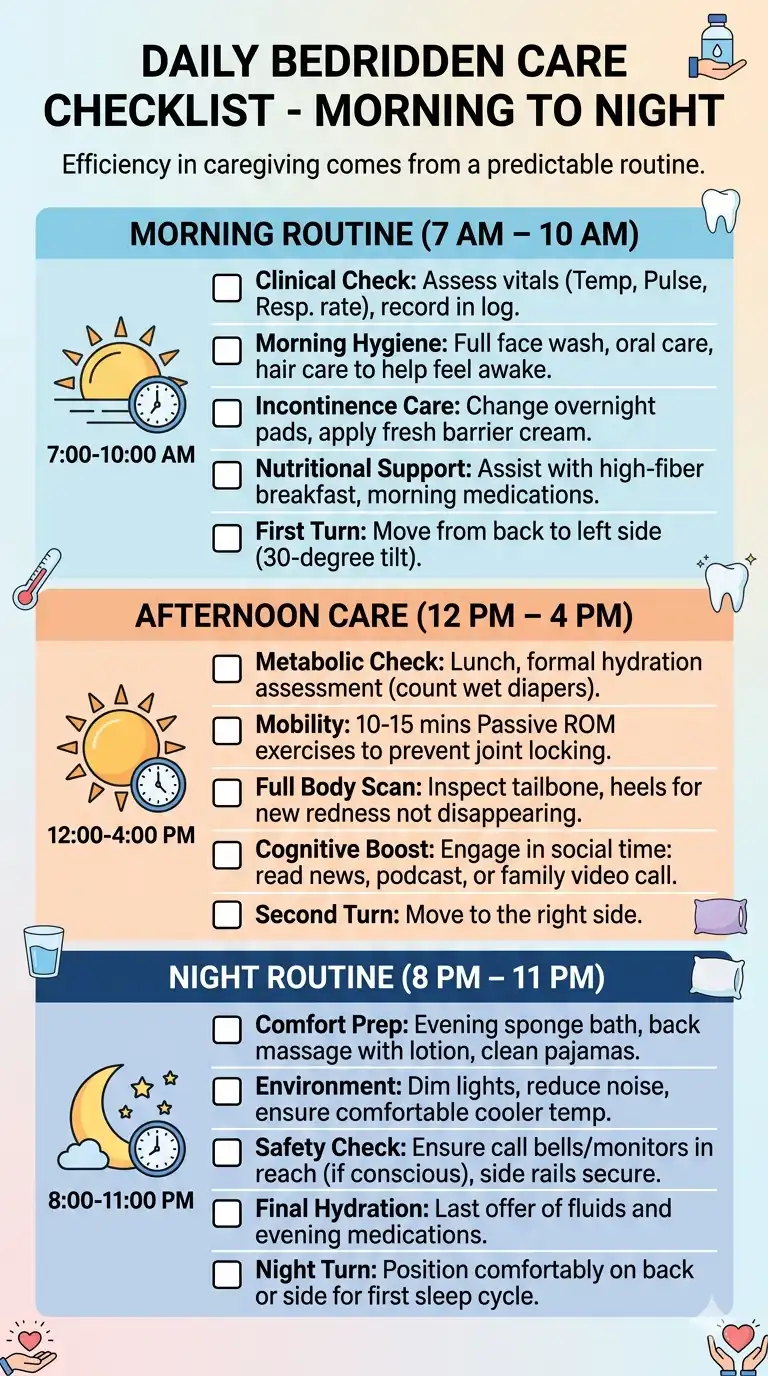
Daily Bedridden Patient Care Checklist – Morning to Night
Efficiency comes from a predictable routine. To stay organized and ensure a hand-off between family members is seamless, keep a professional caregiver log book at the bedside.
| Time | Task | Focus |
| Morning | Oral care, bed bath, skin check | Hygiene & Circulation |
| Midday | High-protein lunch, repositioning | Nutrition & Pressure Relief |
| Evening | Gentle stretching, gown change | Comfort & Contracture prevention |
| Night | Final repositioning, dim lighting | Sleep hygiene & Safety |
Care for Unconscious Patients (Special Guide)
Caring for a non-responsive patient is technically demanding because they cannot provide feedback on pain, thirst, or pins and needles. You are their voice and their nervous system.
- Airway Management: This is your absolute priority. Always maintain a semi-Fowler or lateral position. An unconscious patient cannot clear their own throat; you must prevent silent aspiration by keeping their head elevated.
- Sensory & Emotional Presence: Hearing is scientifically proven to be the last sense to disappear. Talk to them as if they are awake. Explain every touch: I am going to wash your face now, Dad. This reduces potential subconscious stress.
- Preventive Eye Care: If the patient’s eyes remain partially open, they will dry out, leading to permanent blindness (corneal scarring). Use prescribed lubricating drops or moisture chambers as directed by a doctor.
Warning Signs You Should Not Ignore
In-home care, minutes matter. You must be able to distinguish between normal recovery and an acute medical emergency. Call for help if you see:
- Respiratory Distress: Rapid breathing (over 24 breaths per minute), gasping, or a blue tint around the lips and fingernails.
- Advancing Tissue Death: Any skin area that is black (eschar), smelling foul, or oozing green/yellow pus.
- Renal Warning: No urine in the catheter bag or diaper for over 8 hours, suggesting severe dehydration or kidney failure.
- Sepsis Signs: A sudden spike in fever accompanied by confusion or extreme shivering.
- Neurological Shift: A conscious patient who becomes suddenly impossible to wake or demonstrates a new facial droop.
Best Equipment for Bedridden Patients
The right medical equipment is an investment in safety. It prevents caregiver back injuries and significantly lowers the patient’s risk of hospitalization.
- Fully Electric Hospital Bed: Vital for frequent head elevation and adjusting the height for safer caregiving.
- Alternating Pressure Air Mattress: The gold standard for bedsore prevention; it constantly shifts pressure points automatically.
- Transfer Slide Sheets: These low-friction fabrics allow you to move a 200lb patient with the force of only a few pounds, protecting your spine.
- Bedside Commode & Urinals: Essential for maintaining what’s left of a patient’s mobility and independence.
- Medical-Grade Suction Machine: A lifesaver for unconscious patients who struggle to clear phlegm or saliva from their throat.
Expert Caregiver Tip: Don’t Forget Yourself
Caring for a bedridden parent is a marathon of the soul. If you find yourself feeling resentful, exhausted, or constantly angry, you are likely suffering from caregiver burnout. Resilience is built on rest. As a Caregiver Strategist, I cannot stress this enough: Self-care is a part of the patient’s care plan. Use respite care services to step away for a few hours. A rested caregiver provides safer, more compassionate care.
FAQs about Care for Bedridden Patients
Can we prevent bedsores 100% of the time?
While highly preventable with turning and air mattresses, some unavoidable sores occur due to total organ failure. However, 95% are preventable with the 2-hour rule.
How do I handle the smell of an unconscious patient’s room?
Odor is usually a sign of infection (UTI or skin) or poor ventilation. Ensure daily hygiene, use charcoal odor absorbers, and check for hidden skin folds.
What if the patient refuses to be turned?
Explain the risks of bedsores simply. If they still refuse, try smaller, more frequent shifts (15 degrees) rather than a full 90-degree turn to minimize discomfort.
Author Note: Tena Scallan brings over 30 years of clinical and home-care expertise to this guide. Her mission is to turn family members into confident, capable caregivers through professional-grade education.