

Caregiver Blog
Caregiver Coaching: What It Is and How It Helps With Burnout

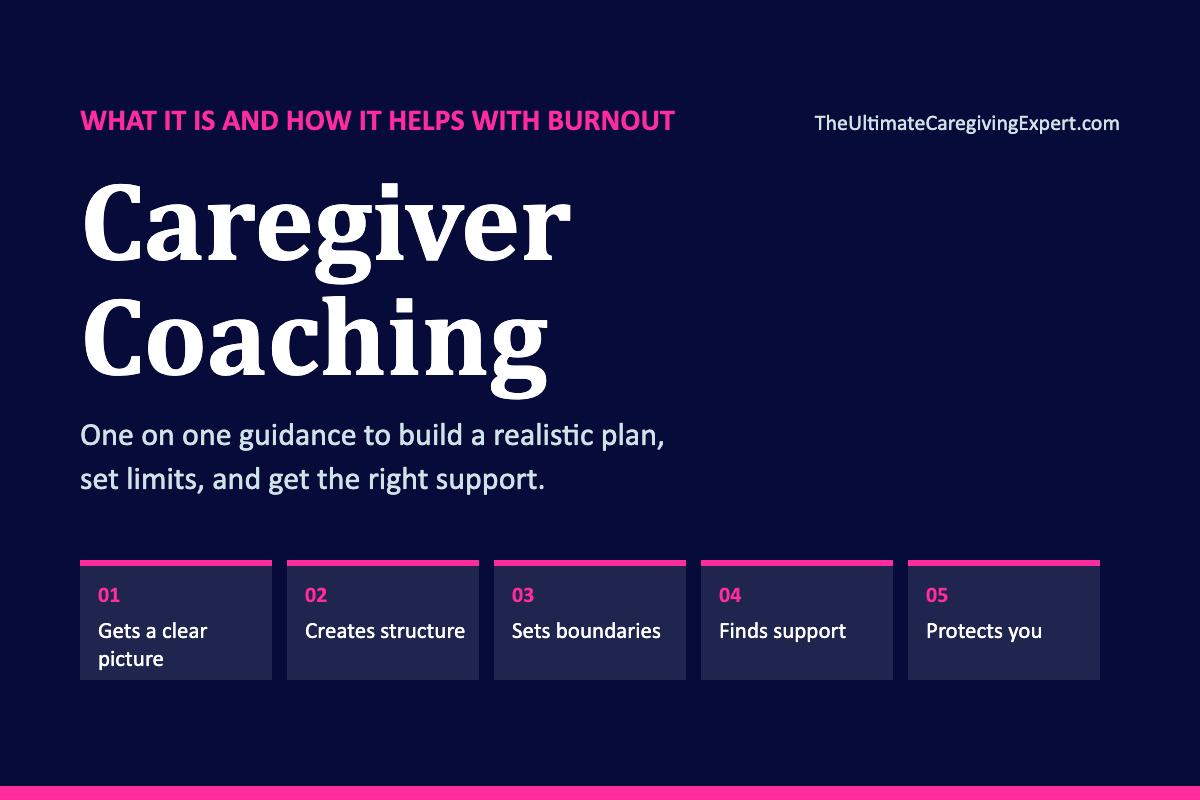
Caregiver coaching is one on one guidance that helps a family caregiver build a realistic plan, set limits, and get the right support, so they can keep caring without burning out. A caregiver coach does not replace a doctor or a therapist. A coach helps you organize your situation, make decisions, and stay steady.
If you are searching for caregiver support, you may have already tried a support group, a hotline, or a long list of resources. Those can help. But many caregivers still say the same thing: I know I need help, I just do not know where to start. That is where caregiver coaching fits.
What Is Caregiver Coaching?
Caregiver coaching is a working relationship focused on action. Instead of only listening, a coach asks questions, looks at your whole week, and helps you decide what to change first. The goal is a plan you can actually follow when you are tired.
A good caregiver coach understands both sides of caregiving: the daily tasks like medications, appointments, and paperwork, and the personal toll on your health, family, work, and money.
Caregiver Support vs Caregiver Coaching: What Is the Difference?
Caregiver support is the big umbrella. It includes support groups, respite care, home care, counseling, hotlines, and community programs. The Family Caregiver Alliance is a good place to explore what is available. Each one meets a different need.
Caregiver coaching sits inside that umbrella. It is the piece that helps you sort through all those options and build a plan around your real life. Think of caregiver support as the tools and caregiver coaching as the person who helps you decide which tool to pick up first.
Signs You Need Caregiver Burnout Help
Burnout builds slowly. Many caregivers do not notice it until they are in the middle of it. Watch for these signs:
- You feel tired all the time, even after you sleep.
- You are more irritable, tearful, or numb than usual.
- You have stopped seeing friends or doing things you enjoy.
- You are missing your own medical appointments.
- You feel guilty no matter what you do.
- You dread the day ahead before it starts.
If you see yourself in this list, you are not failing. You are carrying too much without enough structure or support. Please talk with your own doctor, and if you ever feel hopeless or unsafe, contact a mental health professional or crisis line right away.
What a Caregiver Coach Actually Does
- Gets a clear picture. Looks at everything on your plate and shows you what is urgent and what can wait.
- Creates structure. Builds simple systems for medications, appointments, and paperwork so less lives in your head.
- Sets boundaries. Helps you ask family for specific help and say no without guilt.
- Finds support. Points you to local services, benefits, and respite options that fit your situation.
- Protects you. Plans for your own health, rest, and income so you are protected too.
Who Is Caregiver Coaching For?
It is a good fit if you are a brand new caregiver who feels overwhelmed, a long time caregiver who is running on empty, an adult child balancing work and a parent’s care, or a spouse who has taken on everything. It is also a good fit if you want to keep your job or find new income while caring for someone.
It is not the right choice for a mental health crisis, a medical emergency, or a diagnosis. In those cases, start with a licensed professional.
How to Choose a Caregiver Coach
- Look for real caregiving experience, not only general life coaching.
- Ask what a first session covers and what you will leave with.
- Make sure the coach looks at your whole life, including health, home, and money.
- Choose someone who gives you a written plan, not only conversation.
How Coaching Works at The Ultimate Caregiving Expert
I built the Plan, Heal, Earn framework from years of working in healthcare, running a home care agency, and caring for five family members myself. The Caregiver Stability Snapshot ($197) is the best place to begin. It gives you a written plan with your top priorities, a daily care structure, and a 30 to 60 day action plan, and shows you what to fix first. If you want ongoing structure after that, the Caregiver Stability Plan ($500) builds your full roadmap.
Your Simple Next Steps
You do not have to do this alone, and you do not have to do it all at once. Start with one small step today. Read our guide to caregiver burnout recovery, or begin with the free guide, I Am More Than a Caregiver. If you need to steady your week first, try the Caregiver Reset ($27). When you want help turning it into a plan, the Snapshot is ready for you.
Caregiving is not a role you have to earn rest in. You are allowed to need support.