

Caregiver Blog
First Time Caregiver: Your First 30 Days Checklist

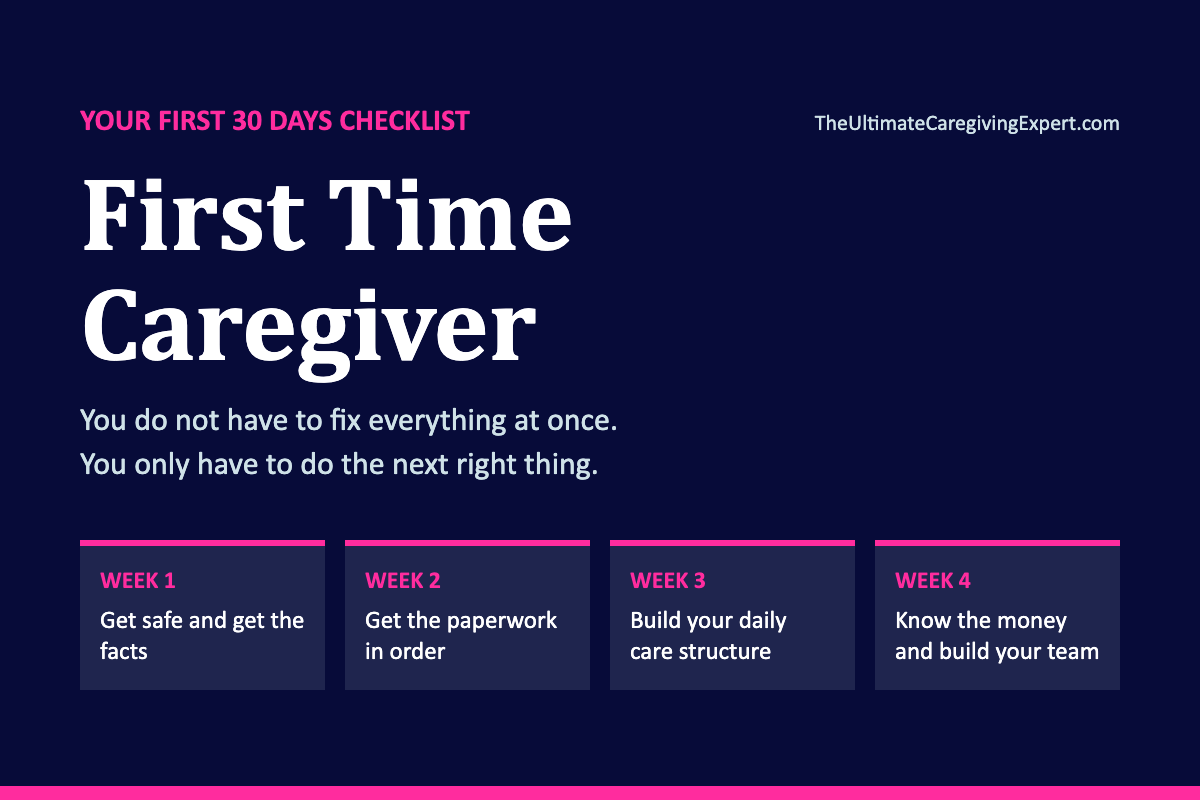
If you are a first time caregiver, spend your first 30 days on four things: get the legal and medical paperwork in order, organize medications and appointments, understand the money, and build a support circle. You do not have to fix everything at once. You only have to do the next right thing.
Becoming a caregiver rarely comes with a warning. One phone call, one hospital stay, or one scary fall, and suddenly you are in charge of someone’s health, home, and bills. It is normal to feel lost. This 30 day plan gives you a clear order to follow.
Week 1: Get Safe and Get the Facts
The first week is about safety and information, not perfection.
- Make a health snapshot. Write down every diagnosis, medication, allergy, and doctor. If you cannot find them, ask at the next appointment.
- Walk through the home. Check that the home is safe: clear walkways, working smoke alarms, good lighting, and a plan for bathing.
- Create an emergency contact sheet. Put the main phone numbers on one page and keep one copy by their phone and one on yours. Our caregiver emergency plan guide walks you through it.
- Have the first honest talk. Ask your loved one what matters most to them. Their wishes should guide your choices.
Week 2: Get the Paperwork in Order
Papers feel boring until you need them. Find or request these now:
- Power of attorney for health care and for finances
- Advance directive or living will
- Insurance cards, including Medicare, Medicaid, and supplemental plans
- A list of bank accounts, bills, and who has access
If these do not exist, an elder law attorney can help you set them up while your loved one can still sign. Do not wait for a crisis.
Week 3: Build Your Daily Care Structure
This is where overwhelm starts to ease. Put medications, appointments, and tasks into one system you can see at a glance.
- Medications. Use a weekly pill organizer and a single medication list.
- Appointments. Use one calendar for every appointment and set reminders for refills.
- Records. Keep one notebook or binder with questions for doctors, notes, and test results.
You are not building a perfect system. You are building one that still works on your worst day.
Week 4: Know the Money and Build Your Team
Caregiving costs real money, and many families do not talk about it until it is a problem. This week, list monthly income and expenses, find out what insurance and benefits cover, and look up local help through your Area Agency on Aging, which you can find with the Eldercare Locator.
Then build your team. Ask a sibling, friend, neighbor, or faith community member for one specific task, like a weekly meal or a ride to appointments. People often want to help and do not know how.
Do Not Forget Yourself
Caregivers who ignore their own health burn out first. Book your own checkups, protect one hour a week that is only yours, and tell one person the truth about how you are really doing. Caring for yourself is part of caring for them.
What a First Time Caregiver Can Skip
You do not need to solve long term care, sell the house, or make every big decision this month. Save those for later. Your only job in the first 30 days is to create enough order that you can think clearly.
Every first time caregiver feels unsure at the start, and that is okay. Work through this checklist one week at a time, and come back to it whenever things change. As a first time caregiver, you are not expected to know everything. You are only expected to take the next step.
Your Simple Next Steps
Start with the free guide, I Am More Than a Caregiver, so you remember you are a person as well as a caregiver. When you are ready to calm the daily chaos, the Caregiver Reset ($27) helps you stabilize your week. The Caregiver Plan ($27) organizes care, paperwork, and backup in one place. And if you want a full, personalized roadmap, the Caregiver Stability Snapshot ($197) shows you exactly where to start.