
Caregiver Blog
Get Paid to Care for a Family Member: 4 Real Programs


Get paid to care for a family member
Most people never think to ask whether that is possible, because caregiving usually starts quietly: a few extra visits, then picking up groceries, then driving to appointments, until one day it is a second full-time job with no paycheck attached. The assumption that family care has to be unpaid is so common that many people never look into whether it has to be that way. It does not have to be, and this guide walks through exactly how.
In This Guide: Get paid to care for a family member
- Why this question feels complicated
- Four real paths to compensation for family caregivers
- What usually disqualifies someone
- How to find your state’s program
- What to do next
- What to expect once you apply
Why This Question Feels Complicated
Most families never think to ask whether caregiving can be paid work. Caregiving usually starts quietly, a few extra visits, picking up groceries, then driving to appointments, until one day it is a second full-time job with no paycheck attached. The assumption that family care has to be free is so common that many people never look into whether it has to be that way.
The honest answer is that getting paid to care for a family member is real, but it is not automatic, and it is not the same everywhere. It depends on the state, the specific program, and the circumstances of the person receiving care. Knowing where to look and what disqualifies most people before they even apply can save you months of frustration and a great deal of guessing.
Four Real Paths to Get Paid to Care for a Family Member
A few different systems can result in a family member getting paid to care for a family member, and it helps to know all four before assuming none apply to you.
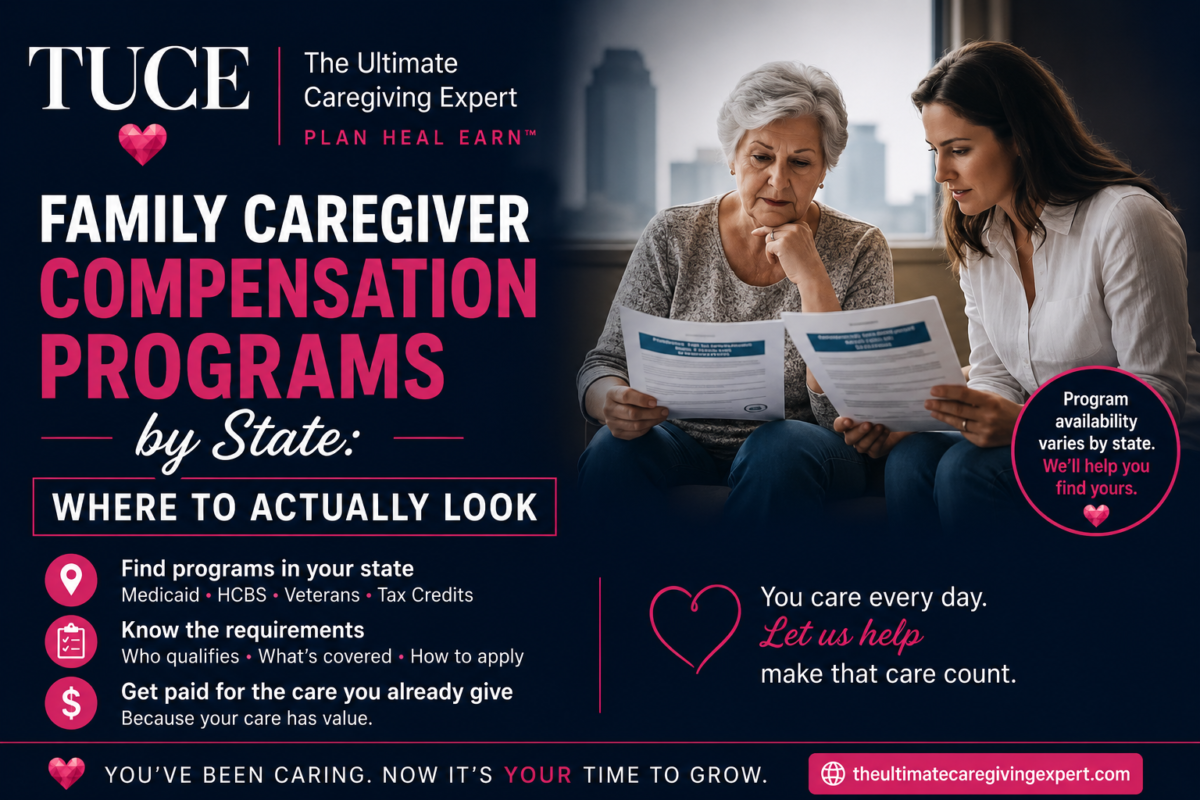
Medicaid self-directed programs. Sometimes called consumer-directed or participant-directed programs, these let an eligible person hire their own caregiver, including a relative, using Medicaid funds. Requirements and program names vary by state, which is exactly why a generic search rarely gives a straight answer.
VA benefits for veterans. The VA offers Aid and Attendance benefits and a Comprehensive Assistance for Family Caregivers program for eligible veterans, which can include a monthly stipend to a designated family caregiver.
Long-term care insurance. Some policies allow a policyholder to pay a family member directly for care, depending on the specific policy terms, so it is worth reading the fine print or calling the insurer directly to confirm.
A formal family employment agreement. In some situations, an agreement drafted with legal guidance allows a care recipient to pay a relative directly out of personal funds, which can also matter for future Medicaid planning down the road.
Each of these four paths has its own paperwork, its own timeline, and its own definition of who counts as eligible, which is why so many families give up after one confusing phone call instead of trying the next option on the list to get paid to care for a family member.
What Usually Disqualifies Someone
Most programs are tied to the care recipient’s financial and medical eligibility, not the caregiver’s. Income and asset limits for the person receiving care are usually the first hurdle to get paid to care for a family member. Some programs also require a specific level of care need, documented through a medical or functional assessment, before compensation is approved.
Spousal caregivers are sometimes excluded from certain programs to get paid to care for a family member, depending on the state, so it is worth checking that detail specifically rather than assuming eligibility one way or the other. A program that pays an adult child to care for a parent may treat a spouse caring for a spouse completely differently, even within the same state.
It is also worth knowing that being denied once does not always mean permanent disqualification. Circumstances change, care needs increase, and a reassessment months later can produce a different result than the first application did.
How to Find Your State’s Program
Because these programs are administered at the state level, searching for a generic national answer usually leads to outdated or incorrect information. The most reliable starting points are your state’s Medicaid website, your local Area Agency on Aging, or a call to the VA directly if the care recipient is a veteran.
The Eldercare Locator, a free national service, can also connect you with the correct local agency if you are not sure where to start to get paid to care for a family member. A single phone call to the right office often clears up in ten minutes what a week of searching online cannot.
What to Do Next to Get Paid to Care for a Family Member
If you think you might qualify to get paid to care for a family member, the practical first step is a phone call, not a form. Contact your state Medicaid office or Area Agency on Aging and ask directly whether a self-directed or consumer-directed care program exists, and what the application process looks like. Bring documentation of the care recipient’s medical needs and financial situation, since you will likely be asked for both.
Write down the name of whoever you speak with and the date of the call. Programs like this often involve more than one department, and having a clear record of who told you what makes any follow-up conversation faster and far less frustrating to get paid to care for a family member.
Documents to Gather Before You Call
Having a few things ready before you pick up the phone tends to speed the whole process up considerably. Most programs will eventually ask for some combination of the following, so gathering them early saves a second and third phone call later.
- Proof of the care recipient’s income and assets, since eligibility is almost always based on their finances rather than yours.
- A recent medical or functional assessment, or contact information for the doctor who can provide one, since most programs require documented proof of care need.
- Basic identification for both the care recipient and the caregiver, along with proof of the relationship between you.
- Any existing insurance policy documents, particularly if long term care insurance is part of what you are exploring.
Having these ready does not guarantee a fast approval to get paid to care for a family member, but it removes one of the most common reasons applications stall: incomplete paperwork sitting in a queue while someone tries to track down a missing form.
What to Expect Once You Apply to Get Paid to Care for a Family Member
Approval is rarely instant. Most self-directed care programs involve an assessment of the care recipient’s needs, a review of financial eligibility, and paperwork establishing you as the paid caregiver of record. This process can take anywhere from a few weeks to a few months, depending on the state and how complete your initial application to get paid to care for a family member.
It helps to treat the waiting period as administrative rather than personal to get paid to care for a family member. A delay does not usually mean something is wrong; it often just means the office is working through a queue. Following up politely every couple of weeks, rather than waiting silently for a decision, tends to move things along faster than most people expect.
If your first application is denied to get paid to care for a family member, ask specifically why, in writing if possible. A denial based on missing documentation is a very different problem than a denial based on income limits, and knowing which one you are dealing with tells you exactly what to fix before you try again.
Where to Go From Here
If you want a clear, honest picture of get paid to care for a family member and where your caregiving and financial situation currently stand- not just information, but an actual plan-, the Caregiver Stability Snapshot takes that full picture and shows you exactly where to focus first.
Free guide, I Am More Than a Caregiver: https://caregivingexpert.gumroad.com/l/Morethanacaregiver
The Caregiver Reset, $27: https://caregivingexpert.gumroad.com/l/Reset
The Caregiver Stability Snapshot, $197: https://theultimatecaregivingexpert.com/caregiver-stability-snapshot/
The Caregiver Stability Plan, $500: https://theultimatecaregivingexpert.com/caregiver-stability-plan/
If you are also looking at ways to bring in income beyond a formal caregiver pay program, our guide on flexible income ideas for caregivers who cannot leave the house covers realistic options you can start building from home.
Getting paid to care for a family member should not require a secret handshake or a lucky guess. The programs exist, the paths exist, and the only real barrier most caregivers face is not knowing where to look. One phone call can change how you get paid to care for a family member.