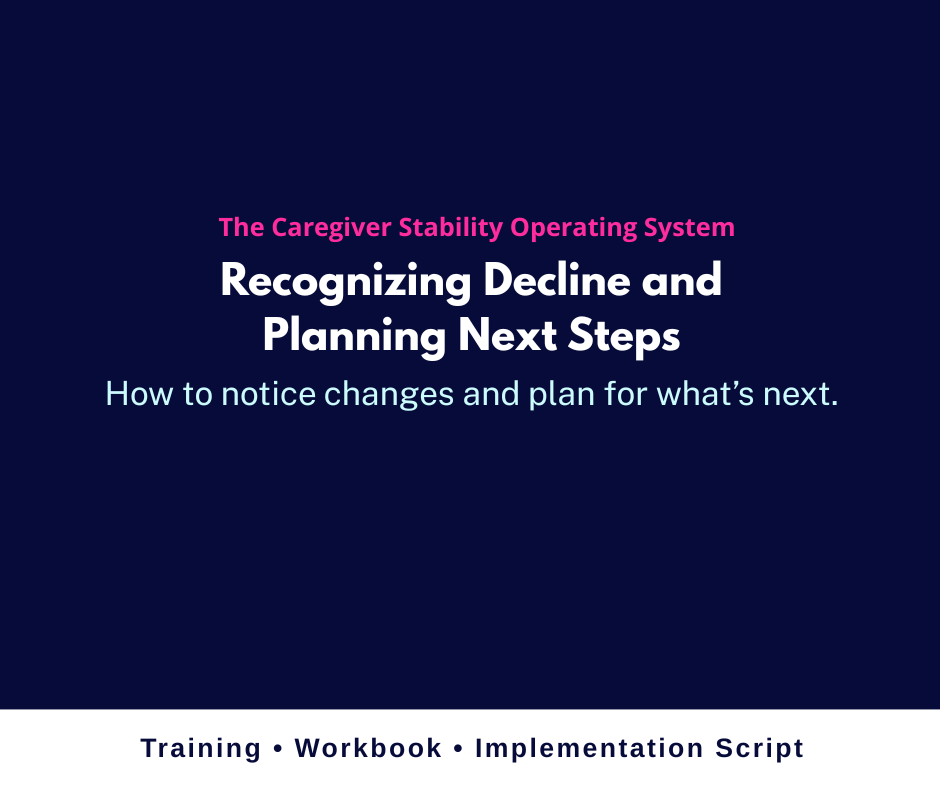
Includes: 1 printable workbook, 1 slide deck, and 1 facilitator script — delivered as instant digital downloads.
Noticing a sudden shift in your loved one’s physical mobility or mental sharpness is one of the most heartbreaking moments of the caregiving journey. It instantly triggers fear, sadness, and deep uncertainty about what the future holds.
But hiding from these changes won’t protect them. In fact, recognizing decline early is your single most effective tool to prevent emergency room crises, avoid unexpected medical complications, and protect your loved one’s remaining independence.
Recognizing Decline in Caregiving is a tactical digital manual and tracking system (PDF workbook) designed to help you cut through the emotional fog. It empowers you to objectively identify early warning signs, document symptom progression, and prepare both practically and emotionally for the changes ahead.
Why Proactive Recognition is Your Best Defense
In senior care, subtle shifts are often the early warning signals of major underlying medical issues. Without a structured monitoring method, these signs are overlooked until an emergency occurs. Mastering this skill allows you to:
Secure Timely Medical Intervention: Provide physicians with clear, chronological clinical data, leading to faster diagnoses and better treatment choices.
Preserve Autonomy & Dignity: Adjust care plans early, before your loved one completely loses the ability to express their personal wishes and daily choices.
Eliminate Caregiver Anxiety: Replace the crushing fear of the unknown with a structured, step-by-step understanding of what to expect and how to handle it.
Avoid Emergency Crisis Mode: Stay two steps ahead by safely preparing your home and schedule for increased care demands before they become urgent.
What is Inside This Practical Tracking Guide?
This downloadable resource delivers a concrete, clinical-grade framework for observing and documenting behavioral shifts without the guesswork:
1. Identifying Physical & Cognitive Red Flags
Learn the exact boundary lines between normal aging and concerning medical decline. This section covers early warning indicators regarding mobility issues, persistent fatigue, subtle memory lapses, and unexplained emotional withdrawal.
2. Clinical-Grade Tracking & Documentation Tools
Discover professional, stress-free methods for keeping daily symptom logs and mood journals. These exact tools are invaluable when speaking with doctors and specialists, ensuring your concerns are taken seriously.
3. Knowing When to Alert Your Healthcare Team
Identify the precise red flags that require immediate medical intervention versus those that can wait for a scheduled visit. Learn how to present your observations to busy doctors so your voice is prioritized.
4. Step-by-Step Transition Planning
Get actionable advice on home modifications, modifying daily hygiene routines, and knowing exactly when it is ethically and practically time to bring in professional home care or hospice resources.
5. Cultivating Emotional Resilience
Decline impacts the entire family dynamic. Discover healthy emotional coping mechanisms for yourself, alongside communication frameworks for having difficult, compassionate conversations with siblings or relatives.
Clinical Trust & Expertise You Can Rely On
This framework is a cornerstone of the Caregiving Resource Collection, engineered from over 25 years of professional home-care management and senior consultation. Every warning sign and tracking system inside aligns with clinical observations and senior care standards established by the National Institute on Aging (NIA) and the CDC, giving your family verified, objective guidance.
FAQs about Recognizing Decline in Caregiving Workbook
How do I know if my parent’s memory loss is just normal aging or actual decline?
Our guide features a direct comparative checklist that maps out normal age-related changes versus red flags for cognitive decline or dementia, helping you evaluate the situation objectively.
What should I do if my loved one gets angry when I point out their decline?
The guide includes specialized psychological communication scripts. They teach you how to discuss changes gently without making your loved one feel defensive, embarrassed, or stripped of their independence.
Is this guide tailored for specific diseases like Alzheimer’s or Parkinson’s?
While it covers general physical and cognitive decline frameworks that apply to conditions like Alzheimer’s, Parkinson’s, and natural frailty, it is designed as a universal tool to catch any functional shift early.
The Complete Caregiving Support System
Managing a health transition works best when your entire care kit is synchronized. Maximize your readiness with these companion resources:
You Do Not Have to Walk This Path in Isolation
Watching a loved one experience decline is a heavy emotional burden. We invite you to join our private Family Caregiving Group on Facebook to safely connect with fellow caregivers navigating similar transitions. Find empathy, shared advice, and genuine comfort.