

Caregiver Blog
State Family Caregiver Support Programs: 7 Essential Resources Nobody Tells You About

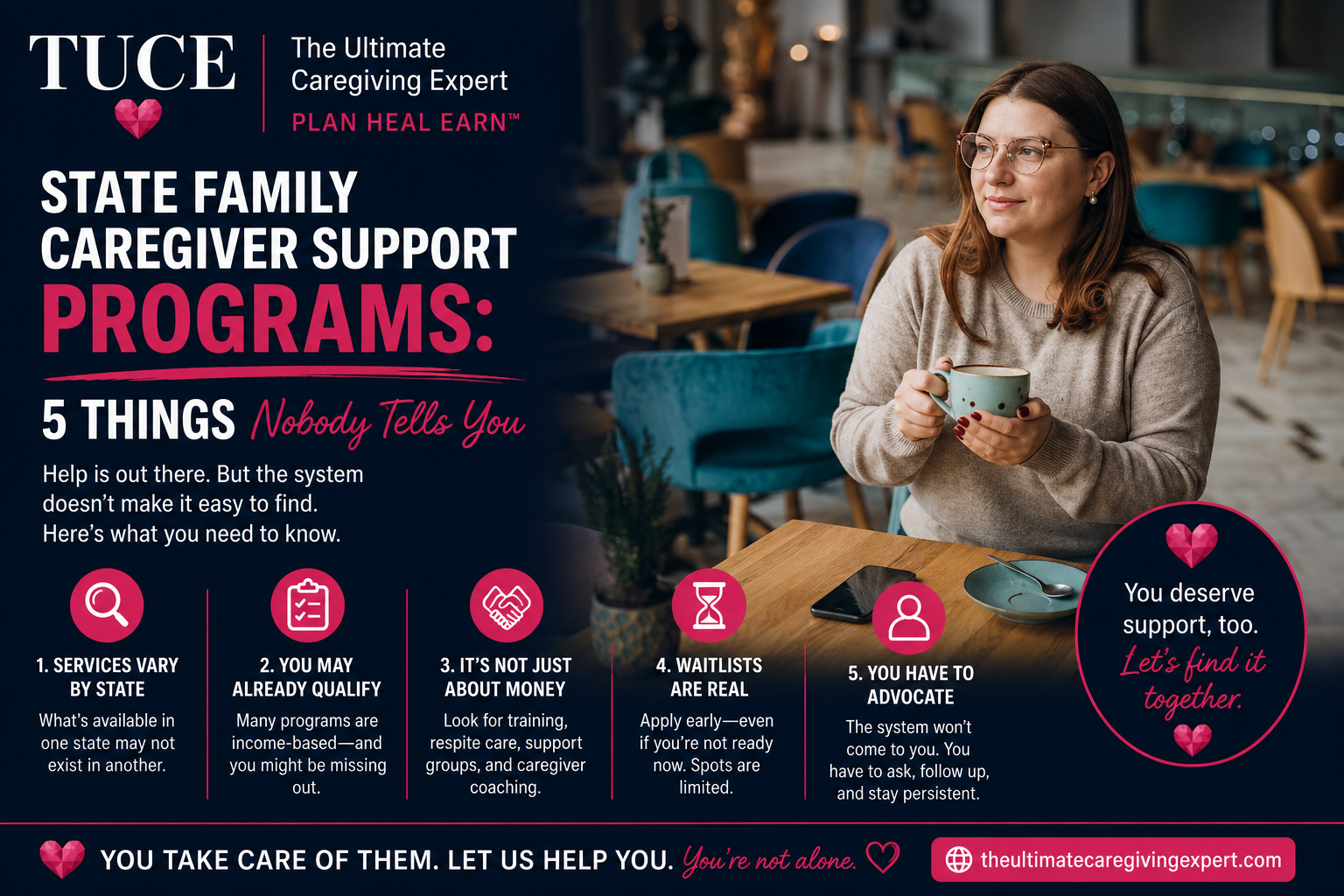
State Family Caregiver Support Programs: 7 Critical Resources Nobody Tells You About
Finding respite care, counseling, training, and financial assistance can be much harder than it should be, especially when you are already exhausted from providing care.
State family caregiver support programs exist in nearly every part of the country, and many caregivers never find out about them until long after they could have used the help. A woman in Ohio spent eighteen months caring for her husband after a stroke, exhausted and isolated, convinced she was simply doing what needed to be done, before a hospital social worker mentioned almost in passing that her county funded a respite program that could have given her a paid break every week.
She had never heard of it. Nobody had thought to tell her.
That gap between what actually exists and what families ever hear about is one of the biggest problems with state family caregiver support programs. Help may be available, but knowing where to look, who to call, and what questions to ask can be surprisingly difficult.
Quick answer: State family caregiver support programs may include respite care, caregiver education, support groups, counseling, training, and other forms of assistance. Availability and eligibility vary by location. Your local Area Agency on Aging is generally one of the best places to start because local staff can explain which resources may be available in your area and how to find out whether you qualify.
Understanding state family caregiver support programs can make a major difference because caregivers often spend months trying to solve problems alone that could potentially be shared with a community organization or support service.
In this post: why these programs can be difficult to find, where to start your search, the types of support worth asking about, how to approach your local agency, how to keep track of the resources you find, and answers to common questions caregivers have.
Why State Family Caregiver Support Programs Are So Hard to Find
Nearly every state has some form of caregiver support, respite funding, counseling, training, or financial assistance, but many programs are not marketed directly to the families who need them.
They often live inside government websites that can be difficult to navigate. They may also be administered locally, meaning the information that matters most to you may not be located on a state level website at all.
This is not necessarily because the programs are secret or exclusive. It is often because caregivers are expected to discover them through agencies, caseworkers, hospitals, social workers, community organizations, or other referral networks.
A caseworker somewhere knows these programs exist. A website may have them listed. But the family in the middle of an actual caregiving crisis, the family that would benefit most, may be the last to hear about them.
That is why understanding how to search for state family caregiver support programs matters almost as much as knowing that they exist.
There is a version of this story that plays out constantly, in different states and with different circumstances, but with the same underlying pattern. A caregiver assumes they are entirely on their own, manages for far longer than necessary without help, and eventually finds out through a passing comment from a nurse, social worker, friend, or relative that meaningful support existed the entire time.
The details change. The pattern rarely does.
Start With Your Area Agency on Aging
Every region of the country is covered by an Area Agency on Aging, a federally supported but locally operated network that can be an important starting point for finding caregiver resources.
For many families, contacting the local Area Agency on Aging can surface more relevant information than spending hours searching online because local staff may know what resources exist in the communities they serve.
You do not need to know the exact name of a program before you call.
Simply explain your situation.
You might say that you are caring for an aging parent, supporting a spouse recovering from surgery, or helping a family member with a chronic condition. Then ask what state family caregiver support programs or local caregiver resources may be available in your area.
Ask specifically about:
• Respite care
• Caregiver support groups
• Caregiver education
• Training programs
• Counseling resources
• Transportation assistance
• Home based support
• Financial assistance or benefit programs
The person you speak with may direct you to another agency or program. That is still progress. The goal of the first call is not necessarily to solve everything. It is to identify the right starting point.
Respite Care Is One of the Most Important Resources
Respite care is one of the most important resources caregivers should ask about because it can provide temporary relief from caregiving responsibilities.
Some state family caregiver support programs may offer paid or subsidized respite services, while others may connect caregivers with organizations that provide temporary support.
Availability, eligibility, and the amount of assistance vary by location, so do not assume you will qualify or that you will not qualify based on what you have heard about another family.
The woman in Ohio mentioned earlier eventually used her county’s respite program for four hours every Thursday afternoon.
She spent that time doing nothing more complicated than sitting in a coffee shop with a book, something that had felt impossible for a year and a half.
Once she knew the program existed, applying took less than an afternoon.
That is an important lesson when searching for state family caregiver support programs. Do not dismiss a resource simply because you assume the benefit will be too small to matter.
A few hours of reliable respite can change how sustainable caregiving feels.
Support Groups and Counseling Resources
State and local caregiver programs may also connect families with support groups, counseling resources, educational programs, or other forms of caregiver assistance.
Many caregivers assume support groups will feel performative or unhelpful. They imagine a room full of strangers comparing hardships without offering anything practical.
Some are surprised to discover the opposite.
Talking with people who understand the specific experience of caregiving can provide practical ideas, perspective, and a sense that they are not the only person struggling with the demands of care.
Counseling resources can also be worth investigating, particularly when caregiving has created significant strain within the family or made it difficult to maintain normal routines.
When researching state family caregiver support programs, ask whether your local agency maintains a list of caregiver support groups, counseling resources, or educational opportunities.
The right support does not have to solve every part of caregiving. Sometimes having someone who understands what you are managing can make the next decision easier.
Caregiver Education and Training
Support does not always mean someone physically coming into the home.
Education and training can also make caregiving more manageable.
Depending on the area, caregivers may be able to find education related to:
• Managing daily caregiving responsibilities
• Communicating with healthcare professionals
• Understanding available community resources
• Preparing for changes in care needs
• Navigating long term care decisions
• Supporting a family member safely at home
• Planning for future caregiving needs
Training can be particularly useful when you have suddenly become responsible for tasks you have never handled before.
Instead of trying to learn everything through trial and error, ask your local agency what caregiver education is available.
These resources are an important part of state family caregiver support programs because information itself can reduce uncertainty. Knowing what to expect and where to turn next can help a caregiver make decisions with greater confidence.
Financial Assistance and Other Benefits
Some caregivers search for state family caregiver support programs because they need direct financial assistance.
This area requires particular care because eligibility, funding, program rules, and available benefits can differ significantly by location and individual circumstances.
Do not assume that one program described online applies automatically to you.
Instead, ask your local Area Agency on Aging or another qualified benefits resource which programs you may be able to explore.
If you are specifically researching whether direct financial compensation may apply to your situation, our post on family caregiver compensation programs by state covers where that fits alongside the broader support programs described here.
For a broader look at benefits you may qualify for beyond caregiver specific programs, the National Council on Aging’s BenefitsCheckUp tool is another resource worth exploring alongside a call to your local Area Agency on Aging.
Remember that financial assistance is only one possible category of help. A respite service, training opportunity, transportation resource, or support group can also reduce the practical pressure of caregiving.
How to Actually Search for State Family Caregiver Support Programs
Start with one phone call rather than trying to research every program on your own first.
Contact your local Area Agency on Aging and explain your caregiving situation honestly.
Then ask:
• What caregiver support programs are available in my area?
• Is respite care available?
• Are there caregiver support groups nearby?
• Are there education or training programs?
• Are there financial assistance programs I should ask about?
• Do I need to meet specific eligibility requirements?
• What documents will I need if I want to apply?
• Is there another local agency I should contact?
Write down whatever they tell you.
A single conversation can surface several resources, and it is easy to forget important details when you are already carrying a large mental load.
If the first person you speak with does not seem to have a full answer, ask whether you can be connected with someone who specifically handles caregiver support.
Larger agencies may have staff with more detailed knowledge of available resources.
The search for state family caregiver support programs becomes much easier when you approach it as a series of small steps instead of one enormous research project.
Do Not Stop After One Call
Finding state family caregiver support programs can sometimes take more than one conversation.
You may be directed from one agency to another. A program may have a waiting list. Another resource may only serve a particular population or type of caregiving situation.
That does not necessarily mean there is no help available.
Ask whether the agency knows of another organization that provides a similar service.
You can also ask whether there is a waiting list, another eligibility pathway, or a different type of resource that could address the same problem.
For example, if a specific respite program is unavailable, another community organization may offer a different form of temporary caregiver support.
The goal is not to find one perfect program.
The goal is to build a network of resources that makes caregiving more sustainable.
Keep a Simple Caregiver Resource List
Once you begin finding state family caregiver support programs, keep the information somewhere you can easily access it again.
Create a simple list containing:
• Organization name
• Contact person
• Type of support offered
• Eligibility requirements
• Application information
• Waiting list information
• Follow up date
• Questions you still need answered
This may seem simple, but it can prevent you from having to repeat the same research every time a new caregiving need appears.
It can also help another family member understand what resources have already been investigated.
A resource list becomes especially valuable when caregiving responsibilities change quickly. Instead of starting over, you have a record of who you contacted and what you learned.
A Few Common Questions
Are State Family Caregiver Support Programs Available in Every State?
Caregiver support resources exist throughout the country, but the specific programs, services, eligibility rules, and funding available to families vary by state and local area.
That is why it is better to investigate the resources available where you live rather than assuming that another caregiver’s experience will be the same as yours.
Do I Have to Be Low Income to Receive Caregiver Support?
Not necessarily.
Some programs may have income or other eligibility requirements, while others may be available more broadly.
Do not assume you are automatically ineligible because your household income is above a certain level. Ask specifically about each program and its current requirements.
Can I Receive Respite Care If I Am Not a Professional Caregiver?
Some respite programs are specifically designed to support unpaid family caregivers.
Eligibility varies, so ask your local agency what is available to family caregivers in your situation.
What If I Do Not Know What Kind of Help I Need?
That is completely fine.
You do not need to walk into your first conversation with a complete plan.
Explain what caregiving responsibilities you currently handle, what is becoming difficult, and what you are most worried about.
The right agency or resource person can help identify which types of support may be relevant.
Why Did Nobody Tell Me These Programs Existed?
There is rarely a satisfying answer.
Many caregiving resources are administered through systems that caregivers encounter only after a crisis, and communication between healthcare providers, government agencies, and families is not always consistent.
The fact that you were not told earlier does not mean you cannot benefit from finding the resources now.
What Should I Do If I Am Told I Do Not Qualify?
Ask why you do not qualify and whether another resource may be available.
Eligibility for one program does not necessarily determine eligibility for every other caregiver resource.
Ask whether there is another organization, service, or program that addresses the same need.
That simple follow up question can prevent a single rejection from becoming the end of your search.
What If the Program I Need Is Not Available?
Sometimes you will discover that a particular service is unavailable in your area or that you do not meet the eligibility requirements.
Do not stop there.
Ask whether the agency knows of another organization that provides a similar service.
You can also ask whether there is a waiting list, another eligibility pathway, or a different type of resource that could address the same problem.
For example, if a specific respite program is unavailable, another community organization may offer a different form of temporary caregiver support.
State family caregiver support programs are not one single system with one universal application. Think of them as a collection of resources that can vary depending on where you live and what your caregiving situation requires.
The goal is not to find one perfect program.
The goal is to build a network of resources that makes caregiving more sustainable.
Where to Go From Here
If figuring out which programs actually apply to your situation feels like one more thing to research alone, the Caregiver Plan helps you organize this search alongside everything else you are already managing, so nothing useful slips through the cracks.
The Caregiver Plan can help you think through what support you need, what responsibilities are currently consuming your time, and where additional structure could make caregiving more manageable.
Free guide, I Am More Than a Caregiver: https://caregivingexpert.gumroad.com/l/Morethanacaregiver
The Caregiver Plan, $27: https://caregivingexpert.gumroad.com/l/Plan
The Caregiver Stability Snapshot, $197: https://theultimatecaregivingexpert.com/caregiver-stability-snapshot/
The Caregiver Stability Plan, $500: https://theultimatecaregivingexpert.com/caregiver-stability-plan/
State family caregiver support programs exist for a reason. Caregiving without meaningful support can wear people down in ways that are often preventable.
The woman in Ohio did not need eighteen months to pass before someone told her what was available.
Neither do you.
Start with one conversation. Ask direct questions. Write down what you learn. Follow the next lead.
You may discover that you are not as alone in this as you thought.